English
 Español
 tiếng việt
 русский
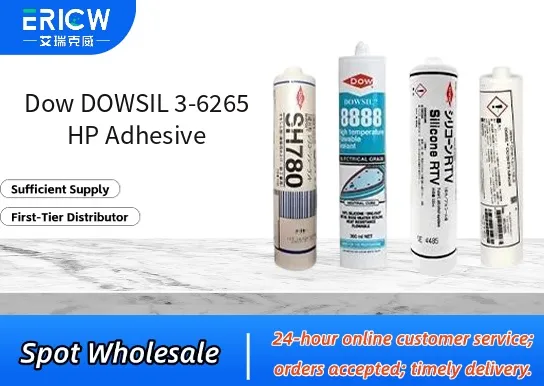
High-performance, platinum-cured silicone adhesive offering excellent thermal stability and long-term reliability.
Low compression set and superior resilience under continuous mechanical stress or thermal cycling.
Excellent adhesion to diverse substrates including metals, glass, ceramics, and engineered plastics without primers.
UL 94 V-0 rated for flame resistance — suitable for safety-critical electronic and automotive applications.
Non-corrosive, halogen-free formulation compliant with RoHS and REACH requirements.
Thermal interface bonding of power electronics modules (e.g., IGBTs, inverters, and battery management systems).
Sealing and potting of LED lighting assemblies exposed to high ambient temperatures and humidity.
Structural bonding in electric vehicle (EV) battery pack housings and cell-to-module interfaces.
Encapsulation of sensors and control units in under-hood automotive environments.
Die-attach and heat-sink attachment in aerospace-grade avionics enclosures.
| Chemical Type | Platinum-catalyzed addition-cure liquid silicone rubber (LSR) |
| Product Form | Two-part, A+B component kit (Part A: base; Part B: catalyst) |
| Appearance | Part A: translucent off-white viscous liquid; Part B: translucent pale yellow liquid |
| Mix Ratio (by weight) | 10:1 (A:B) |
| Cure Schedule (typical) | 25 °C / 24 h or 100 °C / 30 min |
| Shore A Hardness (cured) | 55 ± 5 |
| Primary Applications | Structural bonding, thermal interface materials (TIM), encapsulation, gasketing |
| Regulatory Compliance | RoHS 2015/863, REACH SVHC-free, UL 94 V-0 (per ASTM D3801), ISO 10993-5 (cytotoxicity tested) |
| Common Compatible Systems | Suitability |
| Dow SILASTIC® RTV-2 silicone elastomers | Highly Recommended – Chemically compatible; enables hybrid multi-layer silicone assemblies |
| Standard epoxy-based thermal gap fillers | Recommended – Non-reactive interface; suitable for sequential processing where silicone is applied first |
| Anodized aluminum and stainless steel substrates | Highly Recommended – Excellent adhesion without surface pretreatment |
| Polyamide (PA66), PPS, and LCP thermoplastics | Suitable – Adhesion achieved with optional plasma treatment for optimal bond durability |
Q1: What is the CAS Registry Number for DOWSIL 3-6265 HP Adhesive?
A: The product is a multi-component formulation; individual components have distinct CAS numbers — Part A: 68037-59-2 (polydimethylsiloxane, hydride-terminated); Part B: 13362-20-4 (platinum(0)-1,3-divinyl-1,1,3,3-tetramethyldisiloxane complex). Full composition is available in the Safety Data Sheet (SDS).
Q2: What is the recommended dispensing volume and bond line thickness for optimal performance?
A: Optimal bond line thickness ranges from 0.1 mm to 2.0 mm. For thermal interface use, 0.2–0.5 mm is typical; structural bonding benefits from 0.5–1.5 mm. Excessive thickness (>3 mm) may extend cure time and reduce thermal conductivity.
Q3: How does DOWSIL 3-6265 HP compare to DOWSIL 3-6260 in terms of thermal stability and modulus?
A: DOWSIL 3-6265 HP offers higher thermal stability (continuous use up to 200 °C vs. 180 °C for 3-6260) and a higher modulus (Shore A 55 vs. 45), making it preferred for dynamic load-bearing interfaces requiring dimensional stability at elevated temperatures.
Q4: Is DOWSIL 3-6265 HP suitable for food-contact or pharmaceutical equipment applications?
A: No — it is not FDA 21 CFR 175.300 or USP Class VI certified. It is designed for industrial electronics and automotive use only. For food/pharma applications, consult Dow’s SILASTIC® Biomedical or Food Grade product lines.
Q5: Are there known extractables or leachables under thermal aging conditions (e.g., 150 °C for 1000 h)?
A: GC-MS analysis per IEC 62321-8 shows negligible volatile organic extractables (<5 ppm total organics) after aging. No low-MW cyclic siloxanes (D4/D5) detected above reporting limits (LOQ = 0.1 ppm), confirming suitability for high-reliability sealed systems.
Contact With Us:
E-mail: wangxingqiang@ericwchem.com
Have a Questions? Call Us:
Add:
Building A1, Jiete Industrial Park, Huangpu District, Guangzhou City, Guangdong Province, China