English
 Español
 tiếng việt
 русский
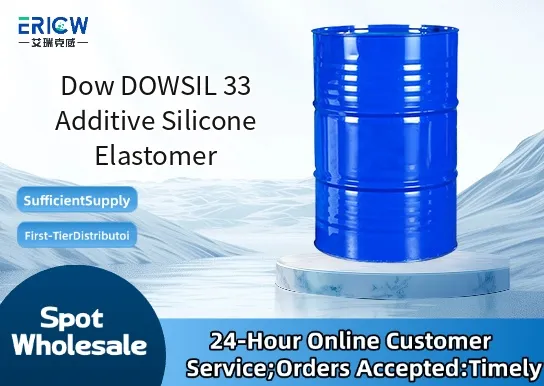
Enhances soft-touch feel and surface elasticity in thermoplastic elastomers (TPEs) and polyolefins.
Improves scratch resistance and abrasion performance without compromising mechanical integrity.
Offers excellent compatibility with common polymer matrices including PP, PE, and SEBS-based TPEs.
Enables low-addition-level modification (typically 1–5 wt%) for efficient cost-performance balance.
Maintains thermal stability during standard extrusion and injection molding processing conditions.
Automotive interior trim components requiring premium haptics and durability.
Consumer electronics housings and wearable device casings.
Medical device overmolding where tactile comfort and skin contact safety are critical.
Household appliance grips and ergonomic handles.
Packaging closures and dispensing systems demanding resilient, non-slip surfaces.
| Chemical Type | Organomodified silicone elastomer dispersion |
| Product Form | Free-flowing, non-dusting granules |
| Appearance | Off-white to light tan granules |
| Primary Applications | Additive for thermoplastic elastomers and polyolefin compounds |
| Key Features | Soft-touch enhancement, surface elasticity improvement, polymer compatibility |
| Benefits | Reduced surface friction, improved scratch resistance, simplified processing |
| Storage Conditions | Store in original sealed container at 15–25°C; protect from moisture and direct sunlight |
| Regulatory Status | Compliant with FDA 21 CFR §177.2600 for indirect food contact applications (when used as directed) |
Q1: What is the primary function of DOWSIL 33 in coating and ink formulations?
A: DOWSIL 33 functions as a surface-modifying additive that enhances substrate wetting, improves slip and rub resistance, and reduces surface tension—leading to smoother film formation and improved leveling without significantly affecting cure speed or adhesion.
Q2: Is DOWSIL 33 compatible with both solvent-based and UV-curable systems?
A: Yes, DOWSIL 33 demonstrates broad compatibility across solvent-borne, high-solids, and free-radical UV-curable formulations. It is not recommended for cationic UV systems unless compatibility testing confirms stability and performance.
Q3: How should DOWSIL 33 be incorporated into a formulation?
A: It is typically added during the let-down stage under moderate agitation. Pre-dilution in a compatible solvent or carrier resin may aid dispersion. Avoid high-shear mixing post-addition to prevent excessive foam generation or phase separation.
Q4: Does DOWSIL 33 affect the pot life or storage stability of reactive systems?
A: When used within typical dosage ranges, DOWSIL 33 generally does not interfere with pot life or shelf stability in most standard formulations. However, compatibility and long-term stability should always be verified under actual storage conditions and intended use temperatures.
Q5: Can DOWSIL 33 be used in food-contact coatings?
A: DOWSIL 33 is not pre-approved for direct food-contact applications. Its suitability depends on final regulatory evaluation of the complete formulation, including migration assessment and compliance with applicable regional food-contact regulations.
Contact With Us:
E-mail: wangxingqiang@ericwchem.com
Have a Questions? Call Us:
Add:
Building A1, Jiete Industrial Park, Huangpu District, Guangzhou City, Guangdong Province, China