English
 Español
 tiếng việt
 русский
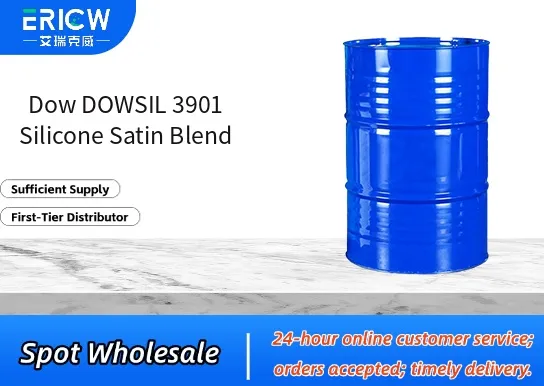
Delivers a soft, velvety satin finish with excellent tactile feel on coated surfaces.
Offers outstanding compatibility with acrylic, polyester, and polyurethane resin systems.
Provides enhanced slip and surface leveling without compromising substrate adhesion.
Resists migration and blooming, ensuring long-term appearance stability in final formulations.
Designed for low-VOC and solvent-free systems, supporting sustainable coating solutions.
Architectural and industrial waterborne coatings requiring subtle sheen control.
Automotive interior trim coatings for dashboard, door panels, and center consoles.
Wood finishes and furniture coatings where uniform matte-to-satin aesthetics are critical.
Plastic coatings for consumer electronics housings and appliance exteriors.
UV-curable and high-solids decorative coatings for premium surface performance.
| Chemical Type | Modified silicone polymer blend |
| Product Form | Liquid concentrate |
| Appearance | Clear to slightly hazy, colorless to pale yellow liquid |
| Primary Applications | Satin finish additive for protective and decorative coatings |
| Key Features | Surface modification, slip enhancement, gloss control |
| Benefits | Improved mar resistance, reduced fingerprint visibility, consistent batch-to-batch performance |
| Recommended Use Level | 0.2–1.5 wt% in final formulation (varies by system) |
| Storage Conditions | Store in original sealed container at 5–30°C; protect from freezing and prolonged UV exposure |
Q1: What is the primary function of DOWSIL 3901 Silicone Satin Blend in coatings and inks?
A: DOWSIL 3901 is a silicone-based additive designed to provide a soft, uniform satin finish while improving surface leveling and reducing gloss variability. It functions as a matting and slip-modifying agent without significantly affecting substrate adhesion or film integrity.
Q2: Is DOWSIL 3901 compatible with both solventborne and waterborne systems?
A: Yes, DOWSIL 3901 exhibits broad compatibility across solventborne, high-solids, and waterborne acrylic, polyurethane, and polyester-based systems. Its balanced hydrophobe-hydrophile character supports stable incorporation in diverse resin chemistries.
Q3: How should DOWSIL 3901 be incorporated into a formulation?
A: It is typically added during the let-down or post-additive stage under moderate agitation. Pre-dilution in a compatible solvent or resin portion is recommended for optimal dispersion. Avoid high-shear mixing that may destabilize the silicone phase.
Q4: Does DOWSIL 3901 affect recoatability or overprintability?
A: When used within recommended dosage ranges, DOWSIL 3901 generally maintains good intercoat adhesion and does not hinder overprintability. However, excessive dosage may lead to surface migration and potential intercoat compatibility issues—formulation testing is advised.
Q5: Can DOWSIL 3901 be used in food-contact coatings?
A: DOWSIL 3901 is not pre-qualified for direct food-contact applications. Customers intending use in such applications must conduct full regulatory evaluation—including migration testing and compliance verification—based on their specific formulation, substrate, and end-use conditions.
Contact With Us:
E-mail: wangxingqiang@ericwchem.com
Have a Questions? Call Us:
Add:
Building A1, Jiete Industrial Park, Huangpu District, Guangzhou City, Guangdong Province, China