English
 Español
 tiếng việt
 русский
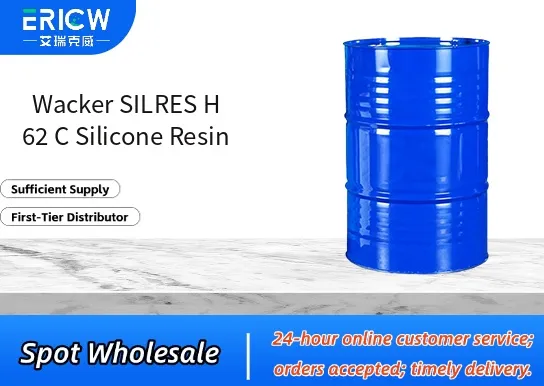
High thermal stability with continuous service temperature up to 250 °C.
Excellent weather resistance and UV stability for long-term outdoor performance.
Good compatibility with organic resins, enabling hybrid formulation development.
Low surface energy providing inherent water repellency and anti-soiling properties.
Solvent-based liquid format ensuring easy handling and integration into existing coating processes.
High-performance heat-resistant coatings for industrial exhaust systems and engine components.
Weatherproof topcoats for architectural façades and pre-finished metal panels.
Hybrid silicone-acrylic binders for premium exterior wall paints and renders.
Water-repellent impregnation treatments for concrete, natural stone, and masonry substrates.
Functional additives in fire-retardant intumescent coatings and protective primers.
| Chemical Type | Methyl-phenyl silicone resin |
| Product Form | Liquid solution |
| Appearance | Clear, pale yellow to amber liquid |
| Solvent | Xylene / aromatic hydrocarbon blend |
| Non-Volatile Content | Approx. 60 wt.% |
| Viscosity (25 °C) | Approx. 80–120 mPa·s |
| Density (20 °C) | Approx. 0.94–0.97 g/cm³ |
| Flash Point (PMCC) | Approx. 35 °C |
Q1: What is the primary function of SILRES H 62 C in coating and ink formulations?
A: SILRES H 62 C acts as a surface modifier and crosslinking aid, enhancing scratch resistance, mar resistance, and substrate wetting—particularly on low-energy surfaces such as plastics and treated metals. It improves film integrity without significantly affecting gloss or transparency.
Q2: Is SILRES H 62 C compatible with conventional organic resin systems?
A: Yes, it demonstrates good compatibility with acrylics, polyurethanes, alkyds, and melamine-formaldehyde resins. Its hydrolytically stable siloxane backbone allows for incorporation into solvent-based, high-solids, and certain water-reducible systems—though pre-testing under actual formulation conditions is recommended.
Q3: How is SILRES H 62 C typically dosed in industrial coatings?
A: It is generally used at low concentrations—typically ranging from 0.1% to 2% by weight relative to total non-volatile content—depending on the desired performance balance between surface enhancement and film flexibility. Optimal dosage should be determined through application-specific trials.
Q4: Does SILRES H 62 C require heat curing to achieve full functionality?
A: While ambient crosslinking occurs slowly over time, thermal activation above 100 °C significantly accelerates the condensation reaction and maximizes performance benefits such as hardness development and chemical resistance. Cure profiles should be optimized based on substrate sensitivity and production constraints.
Contact With Us:
E-mail: wangxingqiang@ericwchem.com
Have a Questions? Call Us:
Add:
Building A1, Jiete Industrial Park, Huangpu District, Guangzhou City, Guangdong Province, China