English
 Español
 tiếng việt
 русский
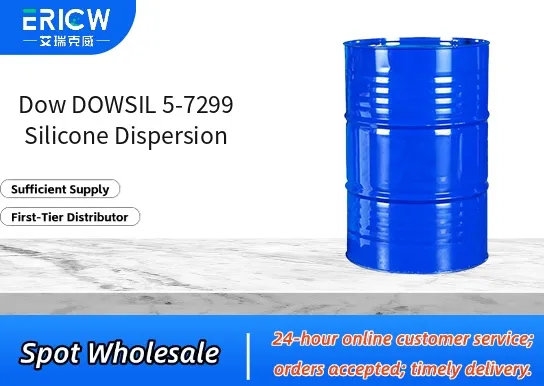
Water-based, non-ionic silicone dispersion offering excellent compatibility with waterborne systems.
Delivers superior surface lubricity and slip enhancement without compromising film integrity.
Provides outstanding hydrophobicity and moisture resistance in cured coatings and inks.
Low VOC and APEO-free formulation supporting sustainable manufacturing requirements.
Stable across a broad pH range (pH 5–9), enabling robust performance in diverse formulation environments.
Waterborne architectural and industrial coatings for improved mar resistance and substrate wetting.
Flexographic and gravure printing inks to enhance print gloss and substrate release.
Textile finishing agents for soft hand feel and durable water repellency.
Adhesives and sealants requiring enhanced flow, leveling, and interfacial compatibility.
Wood coatings where low surface tension aids penetration and topcoat uniformity.
| Chemical Type | Dimethyl silicone polymer dispersion |
| Product Form | Opaque white liquid |
| Appearance | Homogeneous aqueous dispersion |
| Active Content (wt%) | 30 ± 1% |
| pH (25°C) | 6.5 – 7.5 |
| Viscosity (mPa·s, Brookfield RVT, #2 spindle, 20 rpm) | 50 – 200 |
| Particle Size (D50, nm) | 100 – 300 |
| Freeze-Thaw Stability | Pass (3 cycles at -10°C / 25°C) |
Q1: What is the primary function of DOWSIL 5-7299 in coating and ink formulations?
A: DOWSIL 5-7299 is a water-based silicone dispersion designed to provide surface modification benefits—such as improved slip, mar resistance, substrate wetting, and reduced surface tension—without significantly affecting gloss or film clarity in aqueous systems.
Q2: Is DOWSIL 5-7299 compatible with acrylic, polyurethane, and styrene-acrylic dispersions?
A: Yes, it is generally compatible with common aqueous polymer dispersions including acrylics, polyurethanes, and styrene-acrylics. Compatibility should be verified in the final formulation through stability testing under intended storage and processing conditions.
Q3: How should DOWSIL 5-7299 be incorporated into a formulation?
A: It is typically added during the let-down stage, after the main binder and pigments have been dispersed. Gentle mixing is recommended to avoid excessive shear or air entrapment. Pre-dilution with water may aid uniform incorporation, especially in low-viscosity systems.
Q4: Does DOWSIL 5-7299 require post-cure or thermal activation to develop its performance effects?
A: No, its surface-active properties are effective at ambient temperature upon film formation and drying. Performance benefits such as slip and leveling are realized during standard ambient or forced-air drying without requiring elevated temperatures or UV exposure.
Contact With Us:
E-mail: wangxingqiang@ericwchem.com
Have a Questions? Call Us:
Add:
Building A1, Jiete Industrial Park, Huangpu District, Guangzhou City, Guangdong Province, China