English
 Español
 tiếng việt
 русский
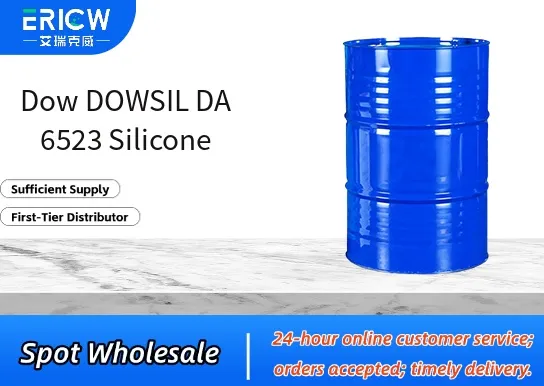
High-performance addition-cure liquid silicone rubber with excellent thermal stability.
Low viscosity for easy dispensing, mixing, and mold filling in automated processes.
Excellent adhesion to various substrates including plastics, metals, and glass without primers.
UL 94 V-0 rated for flame retardancy in demanding electrical and electronic applications.
Biocompatibility compliant with ISO 10993-5 and USP Class VI for medical device component use.
Sealing and encapsulation of LED lighting modules and power electronics.
Soft-touch overmolding for automotive interior controls and sensors.
Medical device gaskets, seals, and wearable sensor housings.
Thermal interface materials (TIMs) for heat dissipation in compact electronics.
Flexible, durable coatings for industrial IoT sensor protection.
| Chemical Type | Addition-cure liquid silicone rubber (LSR) |
| Product Form | Two-part system (Part A: base; Part B: platinum catalyst) |
| Appearance | Translucent, low-viscosity liquid |
| Primary Applications | Encapsulation, sealing, overmolding, and protective coatings |
| Key Features | Flame retardant, biocompatible, low shrinkage, rapid cure |
| Benefits | Reduced cycle time, improved part consistency, enhanced reliability under thermal cycling |
| Cure System | Pt-catalyzed hydrosilylation at elevated temperature (e.g., 120–150°C) |
| Shelf Life | 12 months at 25°C in unopened original packaging |
Q1: What is the primary function of DOWSIL DA 6523 Silicone in coatings and inks?
A: DOWSIL DA 6523 Silicone is a reactive silicone additive designed to improve substrate wetting, enhance leveling, and reduce surface defects such as craters and orange peel—without compromising intercoat adhesion or long-term film integrity.
Q2: Is DOWSIL DA 6523 compatible with both solventborne and waterborne systems?
A: Yes, it demonstrates broad compatibility across solventborne, high-solids, and waterborne acrylic, polyester, polyurethane, and epoxy-based formulations—though optimal performance requires evaluation under specific system conditions and shear profiles.
Q3: How should DOWSIL DA 6523 be incorporated into a formulation?
A: It is typically added during the let-down or post-additive stage under moderate agitation. Pre-dilution in a compatible solvent or resin solution may aid uniform dispersion, especially in low-shear or highly viscous systems.
Q4: Does DOWSIL DA 6523 affect pot life or cure kinetics in reactive systems?
A: As a non-catalytic, non-reactive modifier, it generally does not interfere with standard cure mechanisms—but its impact on pot life should be verified experimentally when used with sensitive catalysts or highly reactive resins.
Contact With Us:
E-mail: wangxingqiang@ericwchem.com
Have a Questions? Call Us:
Add:
Building A1, Jiete Industrial Park, Huangpu District, Guangzhou City, Guangdong Province, China