English
 Español
 tiếng việt
 русский
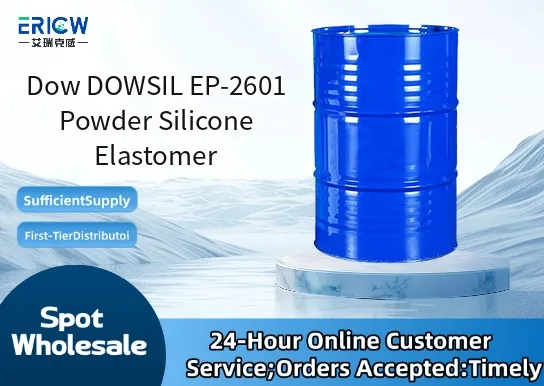
Free-flowing, non-dusting powder form for easy handling and dispersion in dry-blend processes.
Thermally stable silicone elastomer offering excellent resilience and soft-touch feel after compounding.
Compatible with a broad range of thermoplastics and thermoplastic elastomers (TPEs) without requiring solvents or curing agents.
Enables formulation of low-volatility, low-extractable compounds suitable for sensitive applications including personal care devices.
Provides enhanced surface lubricity and reduced coefficient of friction in final molded parts.
Soft-touch overmolding for consumer electronics housings and wearable device components.
Enhancement of tactile properties in medical tubing and diagnostic device grips.
Improving slip and comfort in personal care applicators (e.g., cosmetic brushes, derma-rollers).
Functional additive in thermoplastic compounds for automotive interior trim and controls.
Surface-modifying agent for polymer films used in packaging requiring controlled release or anti-blocking performance.
| Chemical Type | Dimethyl silicone elastomer |
| Product Form | Free-flowing white powder |
| Appearance | Off-white to light beige, fine particulate powder |
| Primary Applications | Tactile enhancement, surface modification, soft-touch compounding |
| Key Features | Solvent-free, thermally stable, non-crosslinking, ready-to-disperse |
| Benefits | No post-curing required; improves processability and end-product feel |
| Storage Conditions | Store in original unopened container at 5–30 °C; protect from moisture |
| Shelf Life | 24 months from date of manufacture when stored properly |
Q1: What is the primary function of DOWSIL EP-2601 in polymer formulations?
A: DOWSIL EP-2601 is a free-flowing silicone elastomer powder designed to act as a high-performance processing aid and surface modifier. It improves melt flow, reduces extrusion pressure, enhances dispersion stability, and imparts a soft-touch, low-friction surface finish to thermoplastics and thermoplastic elastomers.
Q2: Is DOWSIL EP-2601 compatible with common engineering thermoplastics?
A: Yes — it demonstrates broad compatibility with polyolefins (e.g., PP, PE), styrenics (e.g., ABS, HIPS), polyamides (PA6, PA66), and thermoplastic polyurethanes (TPU). Compatibility should be verified experimentally in final formulations due to variations in resin grade, additives, and processing conditions.
Q3: How is DOWSIL EP-2601 typically incorporated into a compound?
A: It is commonly added during dry blending or masterbatch preparation prior to extrusion. Due to its free-flowing nature and low bulk density, it disperses readily in powder or granular feed streams. Melt compounding at standard extrusion temperatures (typically 160–260 °C) ensures uniform distribution without degradation.
Q4: Does DOWSIL EP-2601 affect the mechanical properties of the base polymer?
A: At typical use levels, it generally maintains key mechanical performance—such as tensile strength and impact resistance—while improving processability and surface characteristics. Significant loading may influence modulus or elongation; therefore, dosage should be optimized based on end-use requirements and balanced against functional benefits.
Q5: Can DOWSIL EP-2601 be used in applications requiring regulatory compliance for food contact or skin contact?
A: DOWSIL EP-2601 is formulated from FDA-compliant silicone components and is widely used in applications where incidental food contact or repeated skin contact is expected. However, final regulatory approval depends on the complete formulation, processing history, and applicable jurisdictional requirements—users must conduct their own compliance verification.
Contact With Us:
E-mail: wangxingqiang@ericwchem.com
Have a Questions? Call Us:
Add:
Building A1, Jiete Industrial Park, Huangpu District, Guangzhou City, Guangdong Province, China