English
 Español
 tiếng việt
 русский
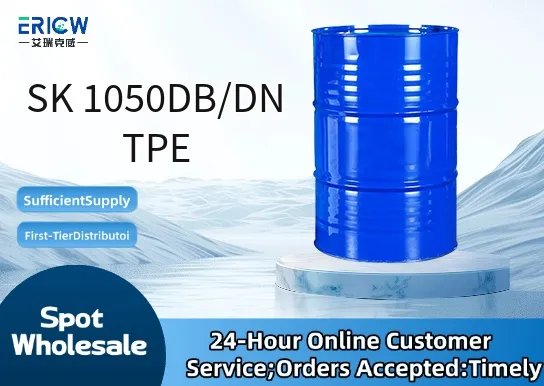
Excellent soft-touch feel with balanced hardness (Shore A 50–55) for ergonomic handling.
Good processability via injection molding and extrusion without requiring drying.
Enhanced thermal stability up to 160 °C short-term, supporting high-speed production cycles.
Low extractables and compliant with FDA 21 CFR §177.2600 for food-contact-adjacent applications.
Outstanding adhesion to polypropylene (PP) and polyethylene (PE) substrates without primer.
Overmolded grips for power tools and hand-held appliances.
Sealing rings and gaskets in automotive fluid systems.
Soft-touch control buttons and interface elements in medical devices.
Flexible hinges and snap-fit components in consumer electronics enclosures.
Non-slip surfaces for industrial handles and safety equipment.
| Chemical Type | Thermoplastic Elastomer (TPE), Styrenic Block Copolymer (SBC)-based |
| Product Form | Pellets |
| Appearance | Off-white, free-flowing granules |
| Hardness (Shore A) | 52 ± 3 |
| Melt Flow Rate (200 °C/5 kg) | 18–22 g/10 min |
| Density | 0.91 g/cm³ |
| Key Features | Soft-touch, PP/PE adhesion, low volatility, recyclable |
| Primary Applications | Overmolding, sealing, ergonomic components |
Q1: What is the primary function of SK 1050DB/DN TPE in thermoplastic elastomer formulations?
A: SK 1050DB/DN TPE functions as a high-performance processing aid and compatibilizer, enhancing melt flow, reducing viscosity during extrusion or injection molding, and improving dispersion of fillers or additives in TPE systems.
Q2: Is SK 1050DB/DN TPE compatible with common TPE base polymers such as SEBS, TPU, or TPV?
A: Yes — it demonstrates broad compatibility with styrenic block copolymers (e.g., SEBS), thermoplastic polyurethanes (TPU), and thermoplastic vulcanizates (TPV), supporting uniform phase integration and improved mechanical consistency across diverse TPE blends.
Q3: How should SK 1050DB/DN TPE be incorporated into a TPE compound?
A: It is typically added during the compounding stage—either pre-blended with base polymer or metered directly into the extruder feed throat—and is effective at low concentrations, generally ranging from 0.1% to 2% by weight depending on formulation complexity and processing requirements.
Q4: Does SK 1050DB/DN TPE affect the final product’s surface appearance or tactile properties?
A: When used within recommended dosage ranges, it supports consistent surface finish and does not negatively impact soft-touch feel or gloss; in some cases, it contributes to reduced die build-up and improved part ejection, leading to more stable surface quality in production.
Contact With Us:
E-mail: wangxingqiang@ericwchem.com
Have a Questions? Call Us:
Add:
Building A1, Jiete Industrial Park, Huangpu District, Guangzhou City, Guangdong Province, China