English
 Español
 tiếng việt
 русский
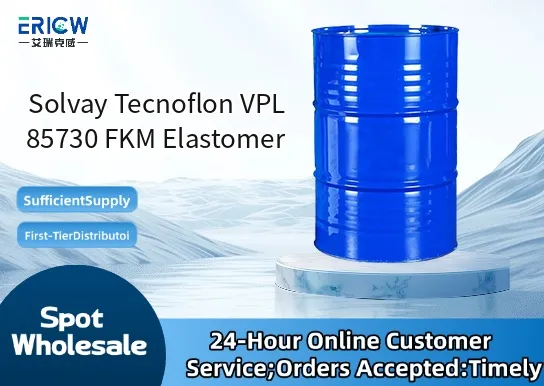
High resistance to aggressive automotive fluids including modern low-SAPS engine oils and biofuels.
Excellent high-temperature performance with continuous service capability up to 200 °C.
Superior compression set resistance, ensuring long-term sealing integrity under dynamic conditions.
Low-temperature flexibility down to –20 °C, maintaining elastomeric behavior in cold-start environments.
Good processability for extrusion and injection molding, enabling efficient production of complex seals and gaskets.
Under-hood automotive seals: valve stem seals, turbocharger gaskets, and fuel system O-rings.
Industrial hydraulic systems requiring resistance to phosphate ester-based fire-resistant fluids.
Aerospace fluid handling components exposed to jet fuels and synthetic lubricants.
Chemical processing equipment seals subject to aromatic hydrocarbons and polar solvents.
Oil & gas downhole tools operating in high-temperature, high-pressure sour gas environments.
| Chemical Type | Fluoroelastomer (FKM), vinylidene fluoride–hexafluoropropylene–tetrafluoroethylene terpolymer |
| Product Form | Uncured gum stock in bale form |
| Appearance | Off-white to light tan, homogeneous rubbery solid |
| Primary Applications | Dynamic and static seals in automotive, aerospace, and industrial fluid systems |
| Key Features | High heat resistance, excellent chemical resistance, low compression set |
| Benefits | Extended service life, reduced maintenance frequency, compliance with OEM specifications |
| Curing System Compatibility | Conventional bisphenol or peroxide curable formulations |
| Standards Compliance | Meets ASTM D1418 classification FKM; conforms to SAE J200/ISO 1629 grade FKM-2 |
Q1: What distinguishes Tecnoflon VPL 85730 from other FKM elastomers?
A: Tecnoflon VPL 85730 is a peroxide-curable, low-viscosity fluoroelastomer specifically designed for high-precision molding and extrusion of thin-walled or complex geometries. Its optimized molecular structure provides excellent processability without sacrificing the inherent thermal stability, chemical resistance, and low compression set typical of high-performance FKMs.
Q2: Is Tecnoflon VPL 85730 suitable for applications requiring FDA compliance?
A: While Tecnoflon VPL 85730 itself is not pre-certified to any specific food-contact regulation, it is commonly formulated into compounds that meet FDA 21 CFR §177.2600 requirements for fluorinated elastomers used in repeated-use food-processing equipment—subject to appropriate compounding, curing, and post-cure validation by the compounder or end user.
Q3: What types of peroxide cure systems are recommended for this grade?
A: Tecnoflon VPL 85730 is formulated for efficient peroxide curing, typically using dicumyl peroxide (DCP) or di-tert-butyl peroxide (DTBP), often with co-agents such as triallyl cyanurate (TAC) or trimethylolpropane triacrylate (TMPTA) to enhance crosslink density and improve mechanical performance at elevated temperatures.
Q4: How does its low-viscosity profile benefit manufacturing processes?
A: The low Mooney viscosity enables easier mixing with fillers and curatives, reduces energy input during processing, improves mold cavity filling—especially for fine features—and supports consistent extrudate dimensional stability, making it well-suited for automotive fuel system seals, semiconductor fluid-handling components, and aerospace O-rings.
Contact With Us:
E-mail: wangxingqiang@ericwchem.com
Have a Questions? Call Us:
Add:
Building A1, Jiete Industrial Park, Huangpu District, Guangzhou City, Guangdong Province, China