English
 Español
 tiếng việt
 русский
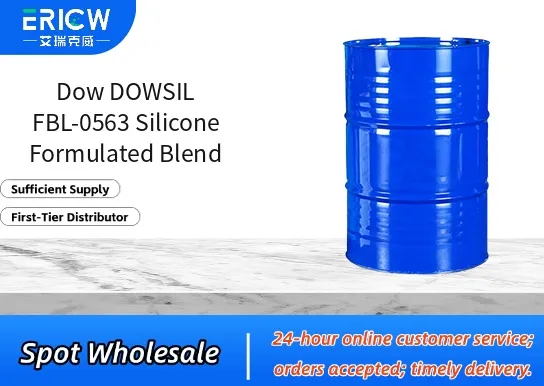
Engineered silicone-based formulated blend offering excellent compatibility with diverse polymer systems.
Provides superior thermal stability and oxidative resistance for extended service life in demanding environments.
Delivers consistent flow behavior and low volatility during high-temperature processing.
Designed for easy integration into compounding and masterbatch formulations without phase separation.
Meets stringent regulatory requirements for industrial applications, including RoHS compliance.
High-performance thermoplastic elastomer (TPE) modifiers for automotive interior components.
Additive for flame-retardant cable jacketing compounds requiring enhanced flexibility and aging resistance.
Processing aid in silicone-modified polyolefin blends for extrusion and injection molding.
Functional additive in specialty sealants and gasketing materials exposed to elevated temperatures.
Component in engineered composites for aerospace interior trim requiring low outgassing and dimensional stability.
| Chemical Type | Silicone polymer blend |
| Product Form | Pellets |
| Appearance | Off-white to light tan, free-flowing pellets |
| Primary Applications | TPE modification, polymer processing aid, thermal stability enhancer |
| Key Features | Thermal stability, compatibility, low volatility, regulatory compliance |
| Benefits | Improved melt flow, reduced die buildup, enhanced long-term aging performance |
| Storage Conditions | Store in original sealed container at 15–25°C; protect from moisture and direct sunlight |
| Shelf Life | 24 months from date of manufacture under recommended storage conditions |
Q1: What is the primary function of DOWSIL FBL-0563 in polymer formulations?
A: DOWSIL FBL-0563 is a silicone-based formulated blend designed to enhance surface performance—particularly improving slip, anti-blocking, and release properties—in thermoplastic and thermoset polymer systems.
Q2: Which polymer matrices is DOWSIL FBL-0563 typically compatible with?
A: It demonstrates good compatibility with a broad range of engineering plastics and elastomers, including polyolefins (PP, PE), polyesters (PET, PBT), polycarbonate, ABS, and silicone rubber compounds—though compatibility should always be verified under actual processing conditions.
Q3: How is DOWSIL FBL-0563 typically incorporated into production processes?
A: It is commonly added during compounding—either via side-stuffer feeder or masterbatch dilution—and is stable under standard extrusion and injection molding temperatures. Pre-dispersion is recommended for optimal distribution.
Q4: Does DOWSIL FBL-0563 affect the mechanical properties of the final polymer part?
A: When used within typical dosage ranges, it generally maintains the bulk mechanical integrity of the host polymer—tensile strength, impact resistance, and thermal stability remain largely unaffected, though slight reductions in elongation at break may occur at higher loadings.
Q5: Is DOWSIL FBL-0563 suitable for applications requiring food contact compliance?
A: While DOWSIL FBL-0563 is not pre-certified for all food-contact regulations, it is formulated using components that are permitted under major global food-contact guidelines—formulators must validate final compliance based on end-use conditions, migration testing, and applicable regional requirements.
Contact With Us:
E-mail: wangxingqiang@ericwchem.com
Have a Questions? Call Us:
Add:
Building A1, Jiete Industrial Park, Huangpu District, Guangzhou City, Guangdong Province, China