English
 Español
 tiếng việt
 русский
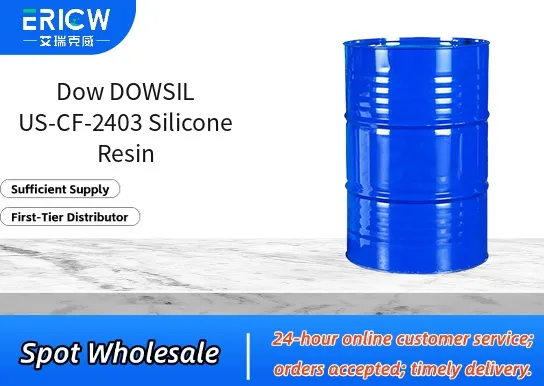
High-temperature stability up to 250 °C continuous use.
Excellent electrical insulation properties with low dielectric loss.
Outstanding hydrophobicity and moisture resistance for harsh environmental performance.
Good compatibility with organic resins and fillers for hybrid formulation flexibility.
Low volatility and minimal outgassing, suitable for vacuum and aerospace applications.
High-reliability encapsulants for power electronics and LED modules.
Thermal interface materials (TIMs) in EV battery management systems.
Dielectric coatings for sensors and automotive control units.
Binders in high-performance thermal management composites.
Protective coatings for aerospace avionics and satellite components.
| Chemical Type | Methyl-phenyl silicone resin |
| Product Form | Clear to light yellow viscous liquid |
| Appearance | Homogeneous, transparent liquid |
| Primary Applications | Encapsulants, coatings, binders for thermal/electrical insulation |
| Key Features | Thermally stable, electrically insulating, hydrophobic |
| Benefits | Enhanced long-term reliability under thermal cycling and humidity stress |
| Storage Conditions | Store at 15–25 °C in tightly sealed containers; protect from moisture |
| Shelf Life | 12 months from date of manufacture when stored properly |
Q1: What is the primary function of DOWSIL US-CF-2403 in coating formulations?
A: DOWSIL US-CF-2403 is a methyl-phenyl silicone resin designed to enhance surface durability, improve mar resistance, and impart water repellency in high-performance industrial and protective coatings. It functions as a crosslinking aid and surface modifier, contributing to improved film integrity without significantly affecting gloss or clarity.
Q2: Is DOWSIL US-CF-2403 compatible with common organic resin systems?
A: Yes — it demonstrates good compatibility with acrylics, polyesters, alkyds, and epoxy-based resins. Compatibility should be confirmed experimentally in the final formulation, as performance may vary depending on solvent type, molecular weight of the base resin, and cure conditions.
Q3: How is DOWSIL US-CF-2403 typically incorporated into a coating system?
A: It is generally added during the let-down stage under moderate agitation. Pre-dilution in a suitable aromatic or ketonic solvent is recommended to ensure uniform dispersion. Final dosage depends on formulation requirements but typically ranges from 0.1% to 2% by weight relative to total solids.
Q4: Does DOWSIL US-CF-2403 require heat curing to achieve full performance?
A: While it can contribute benefits in ambient-cure systems, optimal crosslink density and surface property development are generally achieved under thermal cure conditions — typically above 120 °C. The exact temperature and time profile depend on the overall binder system and substrate.
Contact With Us:
E-mail: wangxingqiang@ericwchem.com
Have a Questions? Call Us:
Add:
Building A1, Jiete Industrial Park, Huangpu District, Guangzhou City, Guangdong Province, China