English
 Español
 tiếng việt
 русский
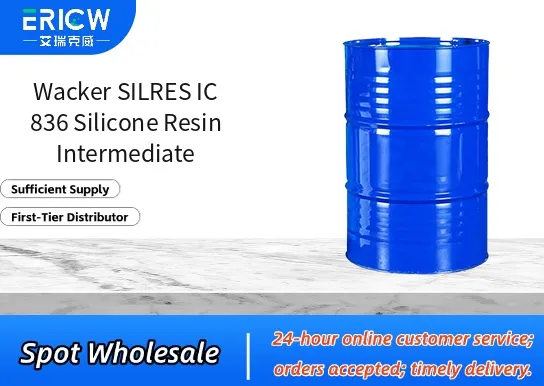
Highly reactive methylphenyl silicone resin with balanced functionality for controlled crosslinking.
Excellent thermal stability and oxidative resistance up to 250 °C in cured state.
Soluble in common organic solvents including xylene, toluene, and VM&P naphtha.
Low viscosity liquid form enabling easy formulation integration and processing.
Designed as a reactive intermediate for further modification into high-performance silicone coatings and binders.
Heat-resistant coatings for exhaust systems and industrial ovens.
Binders in high-temperature pigmented silicone paints.
Base resin for hybrid organic–inorganic protective coatings.
Component in flame-retardant and low-smoke cable jacketing formulations.
Intermediate for synthesizing functionalized silicone resins used in aerospace composites.
| Chemical Type | Methylphenyl silicone resin (partially hydrolyzed silane condensate) |
| Product Form | Liquid |
| Appearance | Clear, colorless to pale yellow viscous liquid |
| Solvent Content | Approx. 40–45 wt% in aromatic hydrocarbons |
| Viscosity (25 °C) | 1,200–2,500 mPa·s (Brookfield DV-II+ at spindle #3, 20 rpm) |
| Reactive Groups | Si–OH and Si–OCH₃ functionalities |
| Flash Point (PMCC) | ≈ 65 °C |
| Storage Stability | ≥ 12 months at 5–25 °C in sealed containers |
Q1: What is the primary function of SILRES IC 836 in coating and ink formulations?
A: SILRES IC 836 serves as a reactive silicone resin intermediate that imparts enhanced surface functionality—such as improved mar resistance, substrate wetting, and controlled gloss—when covalently bound into organic polymer networks during curing.
Q2: Is SILRES IC 836 compatible with common crosslinking chemistries used in industrial coatings?
A: Yes, it is designed to be compatible with hydroxyl- and carboxyl-functional resins and can participate in esterification or transesterification reactions under typical thermal curing conditions; compatibility with amino resins and isocyanates should be verified case-by-case through formulation testing.
Q3: How should SILRES IC 836 be handled and stored to maintain stability?
A: Store in tightly sealed containers under dry, cool conditions (preferably below 25 °C) and protect from moisture and strong acids or bases; prolonged exposure to humidity may lead to premature condensation and viscosity increase.
Q4: Can SILRES IC 836 be used in heat-cured versus ambient-cured systems?
A: It is primarily intended for thermally cured systems where sufficient energy is available to drive condensation reactions; ambient-cure applications are possible only when paired with highly reactive catalysts and carefully optimized formulations.
Q5: What is the typical dosage range for achieving performance benefits without compromising film integrity?
A: Dosage generally ranges from 0.1% to 2% by weight relative to total solids, depending on the desired balance of surface modification and bulk properties; higher loadings may affect crosslink density and require adjustment of cure schedule and catalyst levels.
Contact With Us:
E-mail: wangxingqiang@ericwchem.com
Have a Questions? Call Us:
Add:
Building A1, Jiete Industrial Park, Huangpu District, Guangzhou City, Guangdong Province, China