English
 Español
 tiếng việt
 русский
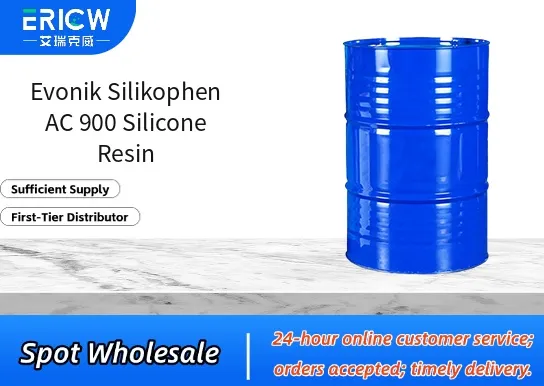
High thermal stability up to 250 °C continuous service temperature.
Excellent weather resistance and UV stability for long-term outdoor performance.
Good compatibility with organic resins including acrylics, epoxies, and alkyds.
Low surface energy enabling superior water repellency and anti-graffiti properties.
Self-crosslinking capability without external catalysts under heat curing conditions.
High-performance industrial coatings for metal substrates.
Heat-resistant coatings for exhaust systems and engine components.
Weatherable topcoats for architectural facades and cladding systems.
Hybrid silicone-acrylic binders in premium exterior wall paints.
Functional additives in fire-retardant and intumescent coating formulations.
| Chemical Type | Phenyl-methyl silicone resin |
| Product Form | Liquid, solvent-based (xylene/alkyl naphthalene) |
| Appearance | Clear to slightly yellow viscous liquid |
| Solids Content | Approx. 60 wt.% |
| Viscosity (25 °C) | 1,200–1,800 mPa·s (Brookfield DV-II+ viscometer, spindle #3, 12 rpm) |
| Density (20 °C) | 0.94–0.97 g/cm³ |
| VOC Content | ~400 g/L (as supplied) |
| Primary Applications | High-temperature coatings, weather-resistant topcoats, hybrid resin systems |
Q1: What is the primary function of Silikophen AC 900 in coating formulations?
A: Silikophen AC 900 is a reactive silicone resin designed to enhance surface properties—particularly slip, mar resistance, and substrate wetting—in high-performance industrial and decorative coatings. It functions as a co-resin or additive that modifies film morphology without significantly compromising hardness or chemical resistance.
Q2: Is Silikophen AC 900 compatible with common organic resin systems?
A: Yes—it exhibits good compatibility with acrylics, polyesters, alkyds, and epoxy resins when properly dispersed. Compatibility may vary depending on molecular weight distribution and polarity of the base system; pre-testing in the final formulation is recommended to ensure homogeneity and performance stability.
Q3: How should Silikophen AC 900 be incorporated into a coating formulation?
A: It is typically added during the let-down or post-additive stage under moderate agitation. Pre-dilution in a compatible solvent or carrier resin improves dispersion. Avoid high-shear mixing at elevated temperatures, as this may promote premature condensation or phase separation.
Q4: Does Silikophen AC 900 require thermal curing to develop its full functionality?
A: While it can provide initial surface effects at ambient conditions, optimal crosslinking and long-term performance—especially in terms of hydrophobicity and abrasion resistance—are achieved through thermal treatment, typically above 120 °C. The extent of cure depends on time, temperature, and catalyst presence in the system.
Q5: Can Silikophen AC 900 be used in waterborne systems?
A: It is inherently solvent-based and not directly dispersible in water. However, it can be formulated into waterborne systems via emulsification with suitable surfactants or by incorporation into hybrid resin dispersions—subject to careful stabilization and compatibility validation.
Contact With Us:
E-mail: wangxingqiang@ericwchem.com
Have a Questions? Call Us:
Add:
Building A1, Jiete Industrial Park, Huangpu District, Guangzhou City, Guangdong Province, China