English
 Español
 tiếng việt
 русский
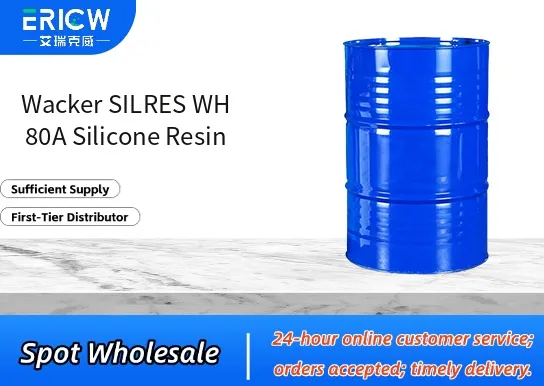
High thermal stability with continuous service temperature up to 250 °C.
Excellent weather and UV resistance for long-term outdoor performance.
Good compatibility with organic resins including acrylics, polyesters, and alkyds.
Low surface energy enabling superior water repellency and anti-graffiti properties.
Solvent-based formulation (xylene/toluene blend) for easy integration into conventional coating systems.
High-performance heat-resistant coatings for industrial exhaust systems and chimneys.
Weatherable topcoats for architectural facades and concrete protection systems.
Hybrid silicone-acrylic exterior wall paints requiring enhanced durability and dirt resistance.
Anti-corrosive primers and topcoats for metal substrates in aggressive environments.
Functional additives in fire-retardant and intumescent coating formulations.
| Chemical Type | Phenyl-methyl silicone resin |
| Product Form | Liquid, solvent-based solution |
| Appearance | Clear, colorless to pale yellow liquid |
| Solvent Content | Approx. 60–65 wt.% (xylene/toluene mixture) |
| Non-Volatile Content | 35–40 wt.% at 150 °C for 60 min |
| Viscosity (25 °C) | Approx. 20–40 mPa·s (DIN 53019) |
| Density (20 °C) | Approx. 0.88–0.92 g/cm³ |
| Flash Point (PMCC) | Approx. 30–35 °C |
Q1: What is the primary function of SILRES WH 80A in coating and ink formulations?
A: SILRES WH 80A is a methyl-phenyl silicone resin designed to enhance surface properties—particularly improving slip, mar resistance, and substrate wetting—without significantly affecting film hardness or gloss. It functions as a surface modifier that migrates to the air interface during film formation.
Q2: Is SILRES WH 80A compatible with common organic polymer systems such as acrylics, polyurethanes, and alkyds?
A: Yes, SILRES WH 80A exhibits good compatibility with a broad range of thermoplastic and thermosetting resins, including solvent-borne and high-solids acrylics, polyester-polyurethane hybrids, and modified alkyds. Compatibility should be verified experimentally for specific formulations due to sensitivity to polarity and solvent composition.
Q3: How is SILRES WH 80A typically incorporated into a formulation?
A: It is generally added during the let-down stage, either neat or pre-diluted in a suitable solvent (e.g., xylene, butyl acetate, or glycol ether blends). Homogeneous dispersion is achieved with moderate agitation; high-shear mixing is not required. Dosage depends on formulation requirements but typically ranges from 0.1% to 2% by weight of total solids.
Q4: Does SILRES WH 80A affect cure chemistry or crosslinking behavior in reactive systems?
A: SILRES WH 80A is non-reactive under standard curing conditions and does not interfere with common crosslinking mechanisms (e.g., isocyanate–hydroxyl, melamine–hydroxyl, or free-radical polymerization). However, it may influence crosslink density distribution at the surface layer due to selective migration, which can subtly impact through-cure kinetics in thick films.
Contact With Us:
E-mail: wangxingqiang@ericwchem.com
Have a Questions? Call Us:
Add:
Building A1, Jiete Industrial Park, Huangpu District, Guangzhou City, Guangdong Province, China