English
 Español
 tiếng việt
 русский
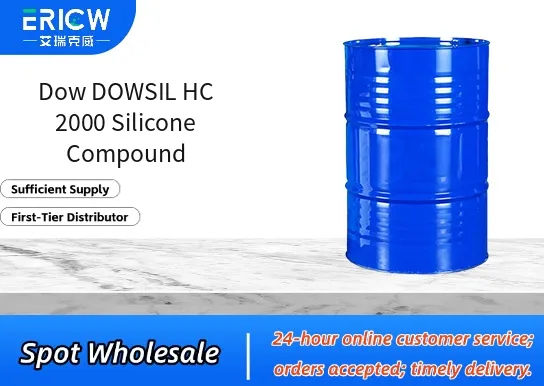
High thermal stability with continuous service capability up to 200 °C.
Excellent electrical insulation properties across wide temperature and frequency ranges.
Low compression set for reliable long-term sealing performance under dynamic stress.
Good adhesion to common substrates including metals, plastics, and cured silicone elastomers.
UL 94 HB rated — meets basic flammability requirements for non-structural applications.
Thermal interface materials in power electronics and LED lighting assemblies.
Sealing and gasketing for automotive engine compartments and under-hood components.
Dielectric encapsulation of sensors, transformers, and high-voltage connectors.
Gap-filling material for battery module thermal management systems.
Insulating potting compound for industrial control and renewable energy inverters.
| Chemical Type | Heat-curable addition-cure silicone rubber |
| Product Form | Two-part liquid compound (Part A + Part B) |
| Appearance | Opaque, viscous liquid (Part A); translucent liquid (Part B) |
| Primary Applications | Thermal management, electrical insulation, sealing & gasketing |
| Key Features | Thermally conductive, electrically insulating, low volatility |
| Benefits | Reduced thermal resistance, enhanced component reliability, RoHS compliant |
| Curing System | Pt-catalyzed hydrosilylation (requires heat cure at ≥100 °C) |
| Storage Stability | ≥6 months at 25 °C when stored unopened in original packaging |
Q1: What is the primary function of DOWSIL HC 2000 in industrial coatings and inks?
A: DOWSIL HC 2000 is a high-performance silicone-based additive designed to improve surface leveling, reduce defects such as orange peel and cratering, and enhance substrate wetting—particularly on low-energy or difficult-to-wet surfaces. It functions primarily as a flow and leveling agent without significantly affecting gloss or intercoat adhesion.
Q2: Is DOWSIL HC 2000 compatible with waterborne, solventborne, and UV-curable systems?
A: Yes, DOWSIL HC 2000 demonstrates broad compatibility across waterborne, solventborne, and UV-curable formulations. Its hydrophobic silicone structure allows for stable dispersion in many aqueous systems when properly incorporated, and it remains effective in low-VOC and high-solids applications without causing foaming or haze under typical usage conditions.
Q3: How should DOWSIL HC 2000 be incorporated into a formulation?
A: It is typically added during the let-down or post-addition stage, after pigments and other high-shear sensitive components have been dispersed. Gentle mixing is recommended to avoid excessive air entrapment. Dosage depends on formulation requirements but generally ranges from 0.1% to 2% by weight of total formulation, with optimal performance determined through application-specific testing.
Q4: Does DOWSIL HC 2000 affect recoatability or overcoating performance?
A: When used within recommended dosage levels, DOWSIL HC 2000 does not negatively impact intercoat adhesion or recoatability. Its molecular design minimizes surface segregation, helping maintain compatibility with subsequent layers—including topcoats and adhesives—without inducing delamination or poor wetting.
Contact With Us:
E-mail: wangxingqiang@ericwchem.com
Have a Questions? Call Us:
Add:
Building A1, Jiete Industrial Park, Huangpu District, Guangzhou City, Guangdong Province, China