English
 Español
 tiếng việt
 русский
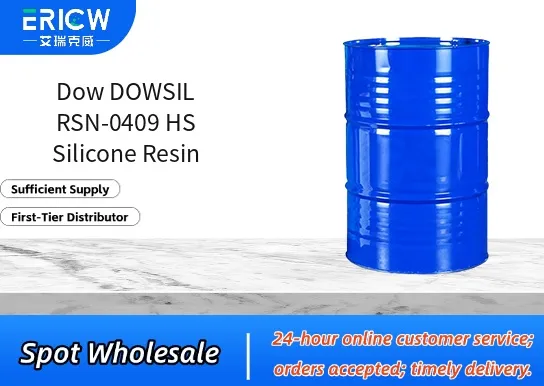
High-solids, solvent-based silicone resin offering excellent thermal stability up to 250 °C continuous service.
Provides superior hardness, abrasion resistance, and chemical resistance in cured coatings.
Enables formulation flexibility with good compatibility with organic resins (e.g., acrylics, alkyds) and pigments.
Delivers low surface energy for enhanced water repellency and release performance.
Designed for ambient- or heat-curable systems, supporting efficient processing across industrial coating lines.
High-performance industrial maintenance coatings for metal substrates.
Heat-resistant coatings for exhaust components, ovens, and furnace parts.
Functional topcoats in architectural and infrastructure applications requiring weatherability.
Release layers in composite manufacturing and mold surface treatments.
Hybrid silicone-organic coatings for automotive under-hood and engine bay components.
| Chemical Type | Methyl-phenyl silicone resin |
| Product Form | Solvent solution (xylene and aromatic hydrocarbon blend) |
| Appearance | Clear, colorless to pale yellow liquid |
| Solids Content | ~60 wt% (as supplied) |
| Viscosity (25 °C) | 1,200–1,800 cP (Brookfield RV, spindle #3, 12 rpm) |
| Density (25 °C) | 0.92–0.95 g/cm³ |
| VOC Content | ~400 g/L (calculated per ASTM D3960) |
| Key Features | High thermal stability, excellent film integrity, low Tg (~30 °C) |
Q1: What is the primary function of DOWSIL RSN-0409 HS in coating formulations?
A: DOWSIL RSN-0409 HS is a high-solids, hydrophobic silicone resin designed to enhance surface durability, improve mar resistance, and impart water repellency and anti-graffiti performance in protective and architectural coatings—without significantly compromising gloss or substrate adhesion.
Q2: Is RSN-0409 HS compatible with common organic resin systems such as acrylics, polyurethanes, and alkyds?
A: Yes, RSN-0409 HS demonstrates good compatibility with a broad range of thermosetting and thermoplastic organic binders, including solvent-borne and high-solids acrylic, polyurethane, and alkyd systems. Compatibility should be verified experimentally in the final formulation due to variations in polarity, molecular weight, and solvent composition.
Q3: How is RSN-0409 HS typically incorporated into a coating system?
A: It is generally added during the let-down or post-addition stage under moderate agitation. Due to its high solids content and low volatility, it disperses readily in compatible solvents and does not require high-shear mixing. Pre-dilution in a suitable aromatic or ketonic solvent may facilitate uniform incorporation.
Q4: Does RSN-0409 HS contribute to film-forming properties or act solely as an additive?
A: RSN-0409 HS functions primarily as a reactive additive—it coalesces and integrates into the cured film matrix rather than forming a discrete phase. Its silanol and/or alkoxy groups can undergo condensation reactions with other resins or crosslinkers, contributing to network density and long-term hydrophobic stability.
Contact With Us:
E-mail: wangxingqiang@ericwchem.com
Have a Questions? Call Us:
Add:
Building A1, Jiete Industrial Park, Huangpu District, Guangzhou City, Guangdong Province, China