English
 Español
 tiếng việt
 русский
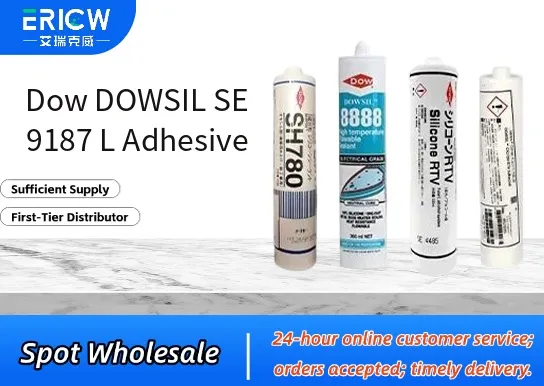
High-performance, low-viscosity silicone elastomer adhesive for precision dispensing and gap-filling.
Excellent adhesion to challenging substrates including plastics, metals, glass, and coated surfaces without primers.
Fast room-temperature cure with optional heat acceleration (e.g., 60–80 °C for enhanced throughput).
Outstanding thermal stability and long-term flexibility across –55 °C to +200 °C operating range.
Low extractables and compliant with ISO 10993-5 (cytotoxicity) for medical device assembly applications.
Medical device bonding: catheter hubs, sensor housings, and wearable diagnostic assemblies.
Automotive electronics: sealing and bonding of LED lighting modules and control unit enclosures.
Consumer electronics: attachment of flexible displays, haptic feedback actuators, and gasketed battery compartments.
Industrial sensors: hermetic encapsulation of MEMS pressure and temperature transducers.
Aerospace components: vibration-damping adhesive bonding of lightweight composite brackets and avionics housings.
| Chemical Type | Platinum-cured addition-cure liquid silicone rubber (LSR) |
| Product Form | Two-component (Part A + Part B), ready-to-mix ratio 10:1 by weight |
| Appearance | Part A: Translucent off-white liquid; Part B: Pale yellow liquid |
| Shore A Hardness (7 days, 23 °C) | 35 ± 3 |
| Tensile Strength (ASTM D412) | 5.2 MPa (typical) |
| Elongation at Break (ASTM D412) | 480% (typical) |
| Primary Applications | Structural bonding, sealing, and encapsulation in regulated and high-reliability environments |
| Regulatory Compliance | USP Class VI, ISO 10993-5 & -10 tested; RoHS 3 and REACH SVHC compliant |
| Common Compatible Systems | Suitability |
| Dow DOWSIL™ Primer-1205 | Highly Recommended – Enhances adhesion to polyolefins and low-surface-energy plastics |
| Dispensing Equipment (Nordson ASI, Fluid Automation) | Highly Recommended – Optimized for meter-mix-dispense systems with 10:1 volumetric ratio capability |
| Curing Ovens (Despatch, Blue M) | Recommended – Uniform airflow and ±2 °C temperature control ensure consistent crosslink density |
| Automated Vision Inspection (Cognex, Keyence) | Suitable – Low outgassing enables reliable post-cure inspection without lens fogging or residue interference |
Q1: What is the CAS Registry Number for Dow DOWSIL SE 9187 L Adhesive?
A: The CAS number applies separately to each component: Part A — 68083-19-2; Part B — 13362-77-3. Full formulation is proprietary and not assigned a single CAS.
Q2: What is the recommended minimum bond line thickness and typical dispense volume per cm²?
A: Minimum functional bond line thickness is 0.05 mm; typical dispense volume ranges from 0.015 to 0.035 mL/cm² depending on substrate roughness and joint geometry.
Q3: How does SE 9187 L compare to DOWSIL™ SE 1700 in terms of viscosity and cure speed?
A: SE 9187 L has lower initial viscosity (~15,000 cP vs. ~45,000 cP for SE 1700) and faster RT cure (Tack-free in ≤30 min vs. ≥60 min), making it better suited for fine-feature dispensing and rapid prototyping.
Q4: Are extractable levels validated per USP <661.3> or ISO 10993-12 for leachables testing?
A: Yes — extractables profiling conducted per ISO 10993-12 using USP <661.3>-aligned solvents (water, 50% ethanol/water, hexane) confirms low volatile organic content (<50 ppm total organics) and absence of platinum catalyst residues above detection limits.
Q5: Can SE 9187 L be used in direct food-contact applications?
A: No — it is not FDA 21 CFR 177.2600 listed or EU 10/2011 compliant for repeated food contact; intended for medical, industrial, and electronic applications only.
Contact With Us:
E-mail: wangxingqiang@ericwchem.com
Have a Questions? Call Us:
Add:
Building A1, Jiete Industrial Park, Huangpu District, Guangzhou City, Guangdong Province, China