English
 Español
 tiếng việt
 русский
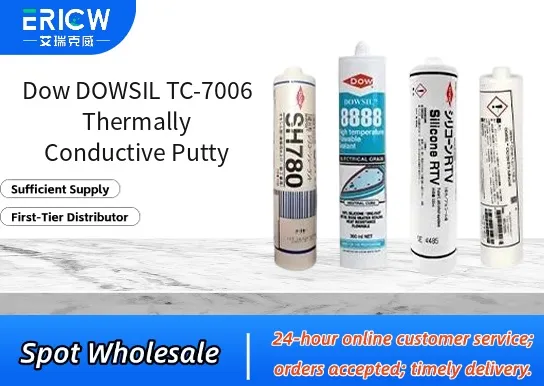
Ultra-soft, non-curing silicone putty with excellent conformability to irregular surfaces and low interfacial resistance.
High thermal conductivity (1.5 W/m·K) achieved via optimized ceramic filler system without compromising compressibility.
No pump-out or dry-out under thermal cycling — maintains stable thermal interface performance over extended service life.
Non-slumping formulation enables reliable vertical and overhead application without support fixtures.
RoHS-compliant, halogen-free, and UL 94 V-0 rated for enhanced safety in electronic assemblies.
Thermal interface material (TIM) between power semiconductors (e.g., IGBTs, SiC MOSFETs) and heat sinks in EV inverters and onboard chargers.
Gap-filling solution for LED modules requiring high-reliability thermal management under mechanical vibration and thermal shock.
Interface layer in 5G base station RF power amplifiers where minimal clamping pressure and long-term stability are critical.
Thermal bridging material for battery module cell-to-cold-plate interfaces in energy storage systems (ESS).
Low-stress TIM for sensitive MEMS sensors and optical components requiring zero outgassing and no chemical migration.
| Chemical Type | Platinum-cured silicone elastomer with thermally conductive ceramic fillers |
| Product Form | Ready-to-use, non-curing putty (tacky, moldable) |
| Appearance | Off-white, homogeneous paste |
| Melting Point / Softening Range | No distinct melting point; remains stable from –40 °C to +200 °C |
| Primary Applications | Low-pressure thermal interface material for electronics cooling |
| Key Features | Non-slumping, non-pump-out, ultra-low modulus (<0.2 MPa at 25 °C), no solvent or carrier oil |
| Benefits | Reduces assembly force, eliminates need for dispensing equipment, enables rework without residue |
| Regulatory Compliance | RoHS 2015/863/EU compliant; REACH SVHC free; UL 94 V-0 (0.8 mm); ISO 9001 certified manufacturing |
| Common Compatible Systems | Suitability |
| Aluminum heat sinks (anodized or bare) | Highly Recommended – Excellent adhesion and thermal stability without corrosion risk |
| Copper cold plates and vapor chambers | Highly Recommended – No galvanic interaction; maintains interface integrity under thermal cycling |
| Thermally conductive elastomeric pads (e.g., gap pads) | Recommended – Can be used as a complementary low-pressure alternative in hybrid TIM designs |
| Automated dispensing systems (e.g., jetting, auger valve) | Suitable – Compatible with standard putty feeders; requires minor parameter tuning for optimal extrusion |
Q1: What is the CAS Registry Number for DOWSIL TC-7006?
A: The CAS number for DOWSIL TC-7006 is 184757-41-1.
Q2: What is the recommended bond line thickness and minimum applied pressure?
A: Optimal performance is achieved at 0.2–1.5 mm bond line thickness with nominal contact pressure of 25–100 kPa; no minimum clamping force required due to inherent tack and conformability.
Q3: How does TC-7006 compare to DOWSIL TC-5600 or TC-5520 in terms of reworkability and modulus?
A: TC-7006 has significantly lower modulus (<0.2 MPa) than TC-5600 (~0.8 MPa) and TC-5520 (~1.2 MPa), enabling full rework without substrate damage or residue — unlike higher-modulus cured gels.
Q4: Does TC-7006 exhibit extractables or ionics that could impact high-voltage insulation performance?
A: No — TC-7006 is formulated with ultra-low ionic content (<5 ppm Na⁺, <2 ppm Cl⁻) and passes IPC-TM-650 2.3.25 surface insulation resistance testing at 1000 V, 85 °C/85% RH for 168 h.
Q5: Is TC-7006 compatible with automated optical inspection (AOI) and X-ray analysis post-assembly?
A: Yes — its uniform density and absence of voids or volatile components ensure consistent X-ray opacity and do not interfere with AOI algorithms for solder joint or component placement verification.
Contact With Us:
E-mail: wangxingqiang@ericwchem.com
Have a Questions? Call Us:
Add:
Building A1, Jiete Industrial Park, Huangpu District, Guangzhou City, Guangdong Province, China