English
 Español
 tiếng việt
 русский
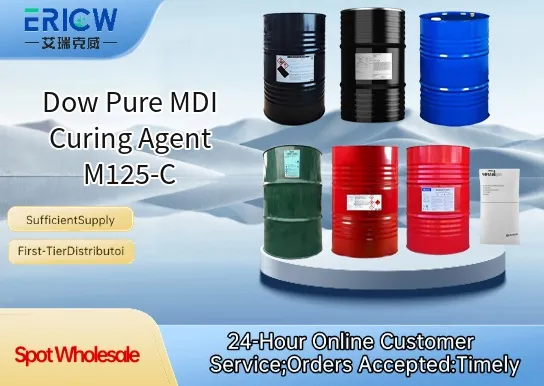
High-purity 4,4'-diphenylmethane diisocyanate (MDI) with minimal monomeric impurities for consistent reactivity and reduced volatility.
Optimized viscosity profile enabling excellent processability in high-speed mixing and dispensing equipment.
Enhanced hydrolytic stability compared to conventional MDI grades, supporting longer pot life under controlled humidity conditions.
Low chloride content meeting stringent regulatory requirements for automotive and medical-grade polyurethane systems.
Consistent batch-to-batch performance validated through Dow’s proprietary quality control protocols.
Automotive seating foams requiring low VOC emissions and dimensional stability.
High-resilience flexible polyurethane foam for premium furniture and bedding.
Reaction injection molding (RIM) components for structural interior trim and instrument panels.
Microcellular elastomers used in gaskets, seals, and vibration-damping parts.
Two-component polyurethane adhesives for composite lamination in transportation and wind energy sectors.
| Chemical Type | 4,4'-Diphenylmethane diisocyanate (MDI), predominantly monomeric |
| Product Form | Liquid |
| Appearance | Clear, pale yellow liquid |
| Primary Applications | Flexible foam, RIM, elastomers, adhesives |
| Key Features | Low monomer content, low viscosity, high purity |
| Benefits | Improved worker safety, enhanced processing reliability, superior final part consistency |
| Storage Conditions | Store under dry nitrogen at 15–30°C; protect from moisture and heat |
| Handling Precautions | Use appropriate PPE; avoid inhalation and skin contact per SDS guidelines |
Q1: What is the primary function of Dow Pure MDI Curing Agent M125-C in polyurethane systems?
A: M125-C is a low-viscosity, aliphatic MDI-based curing agent designed to react with polyols and other active hydrogen-containing components to form thermoset polyurethane networks. It enables fast cure development, excellent mechanical property build, and improved chemical resistance in demanding coating, adhesive, and elastomer applications.
Q2: How does M125-C differ from aromatic isocyanate curing agents such as standard TDI or MDI?
A: Unlike aromatic isocyanates, M125-C is based on purified, low-color aliphatic MDI chemistry, offering significantly enhanced UV stability and reduced yellowing over time. This makes it especially suitable for light-stable topcoats, transparent adhesives, and outdoor applications where long-term appearance retention is critical.
Q3: Is M125-C compatible with moisture-cure or one-component polyurethane systems?
A: No — M125-C is formulated for two-component (2K) polyurethane systems and requires precise metering and mixing with polyol components. It is not intended for ambient-moisture-cure formulations, as its reactivity profile and functionality are optimized for controlled, stoichiometric reactions with hydroxyl-terminated resins.
Q4: What handling precautions should be observed when working with M125-C?
A: As with all isocyanate-containing materials, M125-C requires appropriate engineering controls (e.g., local exhaust ventilation), personal protective equipment (gloves, goggles, respiratory protection where vapor exposure may occur), and strict avoidance of skin contact or inhalation. It should be stored under dry, inert conditions to prevent premature reaction with moisture.
Contact With Us:
E-mail: wangxingqiang@ericwchem.com
Have a Questions? Call Us:
Add:
Building A1, Jiete Industrial Park, Huangpu District, Guangzhou City, Guangdong Province, China