English
 Español
 tiếng việt
 русский
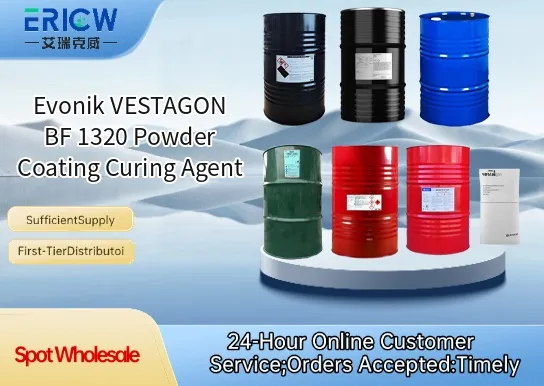
High reactivity with epoxy resins enabling rapid cure at low to medium temperatures (160–180 °C).
Excellent storage stability as a free-flowing powder, minimizing pre-gelation during handling and storage.
Delivers outstanding mechanical properties including hardness, flexibility, and chemical resistance in cured coatings.
Low volatility and negligible odor—compliant with stringent VOC and HAPs regulations for sustainable manufacturing.
Consistent batch-to-batch performance ensured by Evonik’s controlled synthesis and rigorous quality control.
Industrial appliances (e.g., washing machines, ovens, refrigerators).
Architectural metal components (e.g., window frames, façade panels, railings).
Automotive under-hood parts requiring thermal and chemical resilience.
Agricultural and construction equipment exposed to harsh environmental conditions.
Office furniture and shelving systems demanding durable, aesthetic finishes.
| Chemical Type | Bisphenol-A based dicyandiamide adduct |
| Product Form | Free-flowing white to off-white crystalline powder |
| Appearance | Uniform granular powder, no visible lumps or discoloration |
| Primary Applications | Curing agent for epoxy-based thermosetting powder coatings |
| Key Features | Low-cure, high-storage-stability, low-VOC, excellent film integrity |
| Benefits | Energy-efficient curing, extended pot life, enhanced gloss retention and adhesion |
| Recommended Cure Schedule | 160 °C for 20 min or 180 °C for 10 min (dependent on film thickness and substrate) |
| Storage Conditions | Store in original sealed packaging at ≤25 °C and <60% relative humidity |
Q1: What is the primary function of VESTAGON BF 1320 in powder coating formulations?
A: VESTAGON BF 1320 is a highly reactive, low-migration benzoxazine-based curing agent designed to crosslink epoxy resins in thermosetting powder coatings. It enables rapid cure at moderate temperatures while supporting excellent storage stability and film integrity.
Q2: Which resin systems is VESTAGON BF 1320 typically compatible with?
A: It is primarily formulated with standard bisphenol-A based epoxy resins (e.g., EPON™ 1001F, D.E.R.™ 662) and shows good compatibility with hybrid epoxy-polyester systems. Compatibility testing under actual processing conditions is recommended prior to full-scale implementation.
Q3: How does VESTAGON BF 1320 compare to traditional dicyandiamide (DICY) curing agents?
A: Unlike DICY, VESTAGON BF 1320 offers improved latency at ambient temperatures, reduced volatility during melt mixing, and enhanced reactivity at lower cure temperatures—typically enabling full crosslinking between 160–180 °C. It also contributes to lower post-cure yellowing and improved long-term weather resistance in finished films.
Q4: What are key handling and storage recommendations for this product?
A: Store in original sealed containers under cool, dry conditions (below 25 °C) and protect from moisture and direct sunlight. Due to its reactivity, avoid prolonged exposure to elevated temperatures or high humidity during handling. Use within 12 months of receipt for optimal performance.
Q5: Is VESTAGON BF 1320 suitable for food-contact or indoor architectural applications?
A: While VESTAGON BF 1320 exhibits low migration potential and has been evaluated in non-intended food-contact scenarios, final regulatory compliance depends on the complete formulation, cure conditions, and end-use requirements. It is commonly used in architectural and industrial interior coatings where low VOC, high durability, and aesthetic clarity are valued.
Contact With Us:
E-mail: wangxingqiang@ericwchem.com
Have a Questions? Call Us:
Add:
Building A1, Jiete Industrial Park, Huangpu District, Guangzhou City, Guangdong Province, China