English
 Español
 tiếng việt
 русский
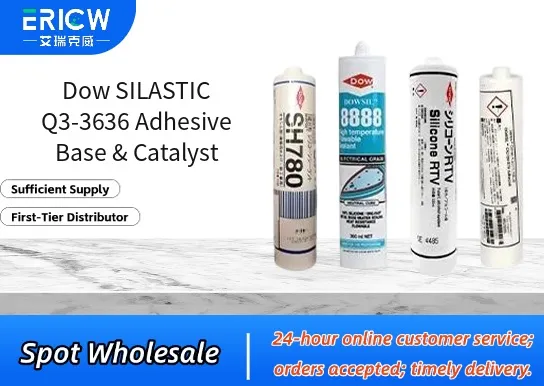
Two-part, platinum-catalyzed liquid silicone rubber (LSR) adhesive system offering excellent adhesion to diverse substrates including silicone, metals, and engineered plastics.
Low-viscosity base combined with a precise catalyst ratio enables smooth dispensing, uniform mixing, and consistent cure profile across automated production lines.
Fast room-temperature or heat-accelerated cure—achieving handling strength in minutes and full physical properties within 24 hours at ambient conditions.
Exceptional thermal stability and long-term flexibility over a wide service temperature range (–55 °C to +200 °C).
Meets ISO 10993-5 cytotoxicity requirements for medical device assembly applications when fully cured.
Medical device bonding: catheter hubs, sensor housings, and implantable component assemblies requiring biocompatibility and reliability.
Automotive sensors and electronic encapsulation where vibration resistance and environmental sealing are critical.
Consumer electronics: waterproof gasketing and structural bonding of wearable device enclosures and flexible displays.
Industrial fluid handling components: sealing of silicone diaphragms, valves, and pump housings exposed to oils and mild chemicals.
Appliance manufacturing: bonding of silicone seals to stainless steel, aluminum, or polycarbonate in cooking and HVAC systems.
| Chemical Type | Platinum-catalyzed addition-cure liquid silicone rubber (LSR) |
| Product Form | Two-component system: Base (Part A) and Catalyst (Part B) |
| Appearance (Base) | Translucent, low-viscosity liquid |
| Appearance (Catalyst) | Clear to pale yellow liquid |
| Mix Ratio (by weight) | 100:1 (Base:Catalyst) |
| Cure Conditions (Typical) | 25 °C / 24 h or 80 °C / 10 min |
| Shore A Hardness (Cured) | 35 ± 3 |
| Regulatory Compliance | Meets USP Class VI and ISO 10993-5 (when fully cured); RoHS 3 and REACH compliant |
| Common Compatible Systems | Suitability |
| Dow SILASTIC™ Q3-3635 LSR | Highly Recommended – Same polymer backbone; seamless compatibility for hybrid molding/adhesive processes |
| Dow CORNING® 3140 Adhesive | Recommended – Similar cure chemistry; requires validation for interlayer adhesion |
| Wacker ELASTOSIL® LR 3043/50 | Suitable – Addition-cure LSR; verify catalyst inhibition and surface preparation |
| Shin-Etsu KE-107-3 | Suitable – Platinum-based system; confirm absence of sulfur/phosphorus inhibitors in substrate |
Q1: What is the CAS Registry Number for Dow SILASTIC Q3-3636?
A: The Base component (Part A) has CAS No. 68037-59-2; the Catalyst component (Part B) has CAS No. 13463-67-7 (platinum-divinyltetramethyldisiloxane complex). Full formulation details are provided in the Safety Data Sheet (SDS).
Q2: Can Q3-3636 be used without heat curing in high-volume production?
A: Yes—Q3-3636 achieves functional handling strength at room temperature within 4–6 hours and full properties after 24 hours. However, heat curing (e.g., 80 °C for 10 minutes) is recommended for production throughput, improved crosslink density, and reduced post-cure migration risk.
Q3: How does Q3-3636 compare to Q3-3634 in terms of adhesion performance and extraction profile?
A: Q3-3636 features enhanced adhesion promoters for broader substrate compatibility (especially to untreated thermoplastics), while maintaining lower volatile extractables (<0.5% w/w per USP <661.1> test protocol) versus Q3-3634 due to optimized siloxane chain architecture and catalyst purity.
Q4: Is Q3-3636 suitable for food-contact applications under FDA 21 CFR §177.2600?
A: Yes—when fully cured and validated per end-use conditions, Q3-3636 complies with FDA 21 CFR §177.2600 for repeated-use food-contact articles. Migration testing (e.g., overall migration limit ≤10 mg/dm²) must be conducted on final bonded assemblies.
Q5: Does Q3-3636 require primer or surface activation before bonding to low-surface-energy plastics like PP or PE?
A: Primer is not required for most applications; however, plasma or corona treatment of polyolefin surfaces is strongly recommended to ensure durable, long-term bond integrity under thermal cycling or humidity exposure.
Contact With Us:
E-mail: wangxingqiang@ericwchem.com
Have a Questions? Call Us:
Add:
Building A1, Jiete Industrial Park, Huangpu District, Guangzhou City, Guangdong Province, China