English
 Español
 tiếng việt
 русский
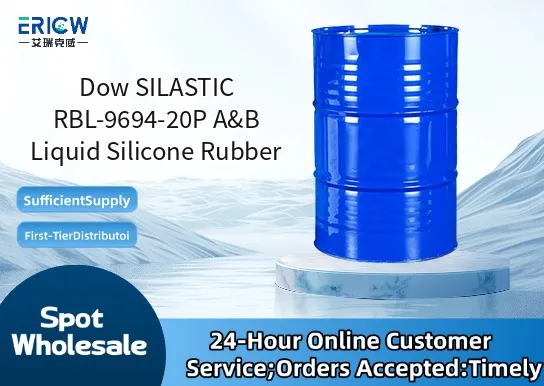
Platinum-catalyzed, two-part addition-cure liquid silicone rubber system for high-precision molding.
Excellent flow characteristics and low viscosity for intricate part replication and thin-wall encapsulation.
UL 94 V-0 rated flame retardancy without halogen additives — ideal for safety-critical applications.
Biocompatibility tested per ISO 10993-5 and USP Class VI; suitable for medical device components.
Outstanding thermal stability with continuous use up to 200°C and low compression set retention.
Medical tubing and catheter components requiring flexibility, kink resistance, and sterilization compatibility.
Seals and gaskets for automotive EV battery modules exposed to thermal cycling and vibration.
Wearable sensor housings and skin-contact electronics requiring soft-touch feel and hypoallergenic performance.
Consumer appliance seals and knobs demanding food-contact compliance (FDA 21 CFR §177.2600) and color stability.
Industrial fluid-handling connectors requiring chemical resistance to oils, coolants, and mild solvents.
| Chemical Type | Platinum-cured addition-cure LSR |
| Product Form | Two-component (A & B) liquid silicone rubber |
| Appearance (Part A) | Translucent, viscous liquid |
| Appearance (Part B) | Translucent, viscous liquid |
| Primary Applications | Medical devices, automotive sealing, wearables, consumer appliances |
| Key Features | Flame retardant (UL 94 V-0), biocompatible, low compression set, excellent flow |
| Shore A Hardness (Cured, 7 days @ 23°C) | 60 ± 3 |
| Cure Conditions (Standard) | 10 min @ 150°C or 30 min @ 125°C |
Q1: What is the primary function of RBL-9694-20P A&B in liquid silicone rubber formulations?
A: RBL-9694-20P A&B is a platinum-catalyzed, two-part addition-cure liquid silicone rubber system designed for high-performance molding applications requiring excellent mechanical properties, thermal stability, and low compression set—commonly used in medical devices, automotive seals, and precision technical parts.
Q2: Is this material suitable for medical or food-contact applications?
A: RBL-9694-20P A&B is formulated to meet common regulatory expectations for biocompatibility and extractables control when fully cured; however, end-use compliance depends on final part geometry, processing conditions, and post-cure protocols. Users must validate suitability per applicable regional requirements and intended application.
Q3: How should RBL-9694-20P A&B be mixed and processed?
A: Components A and B must be thoroughly mixed in the specified ratio using static or dynamic mixing equipment to ensure homogeneous dispersion of the platinum catalyst. Processing is typically performed via injection molding or transfer molding at elevated temperatures (e.g., 100–180 °C), with cure time dependent on part thickness and thermal mass.
Q4: Does this LSR require post-curing, and why?
A: Post-curing is recommended—especially for critical applications—to maximize crosslink density, minimize residual volatiles, and enhance long-term thermal and mechanical stability. The necessity and conditions depend on the target performance profile and end-use environment.
Contact With Us:
E-mail: wangxingqiang@ericwchem.com
Have a Questions? Call Us:
Add:
Building A1, Jiete Industrial Park, Huangpu District, Guangzhou City, Guangdong Province, China