English
 Español
 tiếng việt
 русский
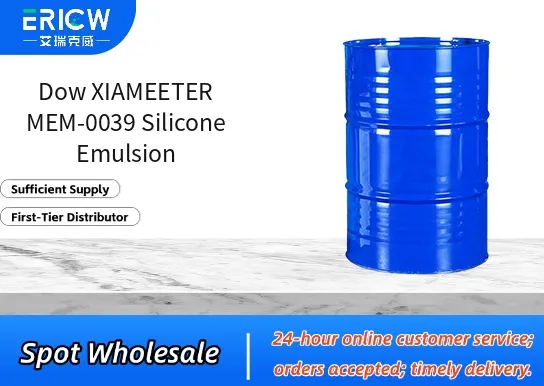
Highly stable anionic silicone emulsion with excellent shelf life under ambient storage conditions.
Provides superior lubricity and surface slip for textile and paper processing applications.
Compatible with common cationic, nonionic, and anionic formulations without phase separation.
Low foaming profile suitable for high-shear industrial coating and impregnation processes.
Offers durable hydrophobicity and soft hand feel on cellulosic and synthetic fibers.
Textile finishing for cotton, polyester, and blended fabrics.
Softening agent in nonwoven fabric production (e.g., wipes, medical gowns).
Surface treatment for release liners and specialty papers.
Component in water-based coatings requiring enhanced substrate wetting and leveling.
Processing aid in fiber spinning and yarn conditioning systems.
| Chemical Type | Dimethicone-based anionic silicone emulsion |
| Product Form | Aqueous emulsion |
| Appearance | Opaque white to off-white liquid |
| pH (1% aqueous solution) | 6.0–7.5 |
| Active Content | 30 ± 1 wt% |
| Density (25°C) | 0.98–1.02 g/cm³ |
| Viscosity (Brookfield, #2 spindle, 20 rpm, 25°C) | 50–150 mPa·s |
| Storage Stability | ≥12 months at 5–35°C in sealed container |
Q1: What is the primary function of Dow XIAMEETER MEM-0039 in coating and ink formulations?
A: Dow XIAMEETER MEM-0039 is a non-ionic silicone emulsion designed to provide surface leveling, improved substrate wetting, and reduced surface defects such as craters and orange peel—without significantly affecting intercoat adhesion or gloss.
Q2: Is MEM-0039 compatible with waterborne acrylics, polyurethanes, and epoxy dispersions?
A: Yes, MEM-0039 exhibits broad compatibility with common waterborne polymer systems, including acrylic, polyurethane, and epoxy dispersions. It is recommended to conduct compatibility testing under actual formulation conditions due to variations in pH, ionic strength, and co-solvent content.
Q3: How should MEM-0039 be incorporated into a formulation to ensure optimal performance?
A: MEM-0039 is typically added during the let-down stage, after high-shear dispersion of pigments and fillers. Gentle mixing is recommended to avoid excessive air entrapment. Pre-dilution with deionized water may aid uniform incorporation, especially in low-viscosity systems.
Q4: Does MEM-0039 impact film hardness or drying behavior?
A: At typical use levels, MEM-0039 has minimal effect on film hardness development or drying kinetics. It remains largely at the air–film interface and does not interfere with crosslinking reactions in thermosetting systems when used within recommended dosage ranges.
Q5: Can MEM-0039 be used in applications requiring FDA compliance for indirect food contact?
A: MEM-0039 is not pre-approved for direct or indirect food contact applications. Customers intending to use it in food-contact coatings must evaluate regulatory suitability based on final formulation, end-use conditions, and applicable regional requirements.
Contact With Us:
E-mail: wangxingqiang@ericwchem.com
Have a Questions? Call Us:
Add:
Building A1, Jiete Industrial Park, Huangpu District, Guangzhou City, Guangdong Province, China