English
 Español
 tiếng việt
 русский
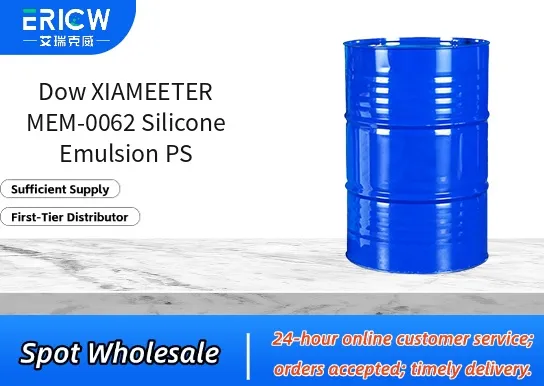
Highly stable anionic silicone emulsion with excellent freeze-thaw resistance.
Low surface tension and superior spreading/wetting performance on diverse substrates.
Compatible with water-based systems including acrylics, vinyl acetate copolymers, and polyurethane dispersions.
Provides durable softness, slip, and hydrophobicity without compromising film integrity.
Non-yellowing and UV-stable formulation suitable for light-sensitive applications.
Textile finishing for enhanced hand feel, wrinkle recovery, and water repellency.
Leather conditioning agents to improve softness, flexibility, and surface uniformity.
Additive in architectural coatings for improved substrate wetting and mar resistance.
Component in paper and board coatings to reduce surface friction and enhance gloss control.
Functional additive in agrochemical adjuvants for improved spray droplet retention and coverage.
| Chemical Type | Dimethyl polysiloxane-based anionic emulsion |
| Product Form | Aqueous emulsion |
| Appearance | Opaque white to slightly bluish liquid |
| pH (1% aqueous solution) | 6.0 – 7.5 |
| Active Content (wt%) | 30 ± 1% |
| Viscosity (mPa·s, Brookfield RVT, #2 spindle, 20 rpm) | 200 – 600 |
| Particle Size (D50, nm) | 150 – 300 |
| Storage Stability (25°C, 6 months) | No phase separation or coagulation |
Q1: What is the primary function of MEM-0062 in coating and ink formulations?
A: MEM-0062 functions as a surface modifier and leveling agent, helping to reduce surface tension, improve substrate wetting, and minimize defects such as craters, orange peel, and pinholes in water-based and solvent-borne systems.
Q2: Is MEM-0062 compatible with acrylic, polyurethane, and epoxy resin systems?
A: Yes, MEM-0062 is broadly compatible with common synthetic resins including acrylics, polyurethanes, and epoxies—particularly in aqueous dispersions and hybrid formulations. Compatibility testing under actual processing conditions is recommended to confirm stability and performance.
Q3: How should MEM-0062 be incorporated into a formulation?
A: It is typically added during the let-down or post-addition stage under moderate agitation. Avoid high-shear mixing immediately after addition to preserve emulsion integrity. Dosage depends on formulation requirements but generally ranges from 0.1% to 2% by weight of the total batch.
Q4: Does MEM-0062 affect the gloss or drying behavior of finished films?
A: MEM-0062 is designed to provide surface modification without significantly altering film gloss or drying kinetics. In most cases, it does not interfere with crosslinking or film formation, though minor effects may occur depending on resin chemistry and concentration.
Q5: Can MEM-0062 be used in food-contact compliant coatings?
A: MEM-0062 is not pre-approved for direct food-contact applications. Formulators seeking food-contact compliance must conduct full regulatory evaluation—including migration testing and regulatory dossier review—based on the final end-use configuration and applicable regional requirements.
Contact With Us:
E-mail: wangxingqiang@ericwchem.com
Have a Questions? Call Us:
Add:
Building A1, Jiete Industrial Park, Huangpu District, Guangzhou City, Guangdong Province, China