English
 Español
 tiếng việt
 русский
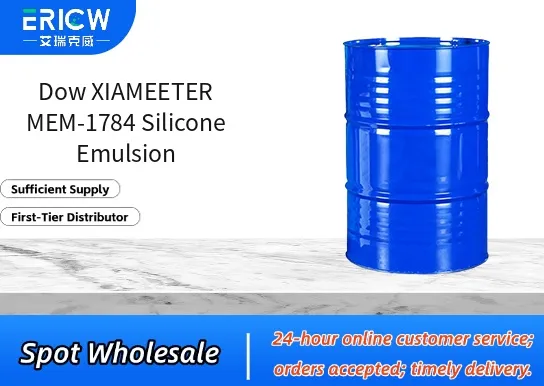
Highly stable anionic silicone emulsion with excellent shelf life and freeze-thaw resistance.
Provides superior softness, smoothness, and hydrophobicity to treated substrates.
Compatible with cationic, nonionic, and amphoteric systems for flexible formulation integration.
Low foaming profile suitable for high-shear processing and continuous industrial applications.
Eco-friendly formulation with low VOC content and no APEOs or alkylphenol ethoxylates.
Textile finishing for cotton, polyester, and blended fabrics to enhance hand feel and wrinkle recovery.
Leather conditioning and topcoat treatments to improve suppleness and water repellency.
Personal care formulations including hair conditioners and skin moisturizers for sensory enhancement.
Industrial coatings and paper sizing agents to impart surface slip and moisture barrier properties.
Nonwovens treatment for medical gowns, wipes, and filtration media requiring hydrophobic performance.
| Chemical Type | Dimethyl silicone polymer emulsion (anionic) |
| Product Form | Opaque white liquid |
| Appearance | Uniform milky emulsion, free of sediment or phase separation |
| pH (1% aqueous solution) | 6.0 – 7.5 |
| Active Content (wt%) | 30 ± 1% |
| Density (25°C, g/cm³) | 0.98 – 1.02 |
| Viscosity (25°C, mPa·s) | 200 – 600 (Brookfield RV, spindle #3, 12 rpm) |
| Primary Applications | Textile & leather softening, personal care conditioning, industrial surface modification |
Q1: What is the primary function of MEM-1784 in coating and ink formulations?
A: MEM-1784 is a non-ionic silicone emulsion designed to provide surface leveling, slip enhancement, and substrate wetting improvement. It helps reduce surface defects such as orange peel, cratering, and mottling while maintaining compatibility with water-based systems.
Q2: Is MEM-1784 compatible with acrylic, styrene-acrylic, and polyurethane dispersions?
A: Yes, MEM-1784 exhibits broad compatibility with common waterborne polymer dispersions, including acrylics, styrene-acrylics, and anionic or non-ionic polyurethane dispersions. Compatibility should be confirmed via small-scale formulation trials under intended processing conditions.
Q3: How should MEM-1784 be incorporated into a formulation?
A: It is recommended to add MEM-1784 during the let-down stage, after high-shear dispersion of pigments and fillers. Gentle mixing is sufficient — avoid prolonged high-shear agitation to prevent potential emulsion destabilization. Pre-dilution with water may aid uniform incorporation.
Q4: Does MEM-1784 affect film formation or drying behavior in water-based coatings?
A: MEM-1784 typically does not interfere with film formation or significantly delay drying times when used at recommended dosage levels. Its low-volatility silicone content remains in the dried film to deliver persistent surface performance without compromising coalescence.
Q5: Can MEM-1784 be used in applications requiring FDA-compliant indirect food contact?
A: MEM-1784 is not specifically manufactured or certified for food-contact applications. For regulatory-sensitive uses, consult Dow’s regulatory documentation and conduct appropriate compliance assessments with qualified experts before implementation.
Contact With Us:
E-mail: wangxingqiang@ericwchem.com
Have a Questions? Call Us:
Add:
Building A1, Jiete Industrial Park, Huangpu District, Guangzhou City, Guangdong Province, China