English
 Español
 tiếng việt
 русский
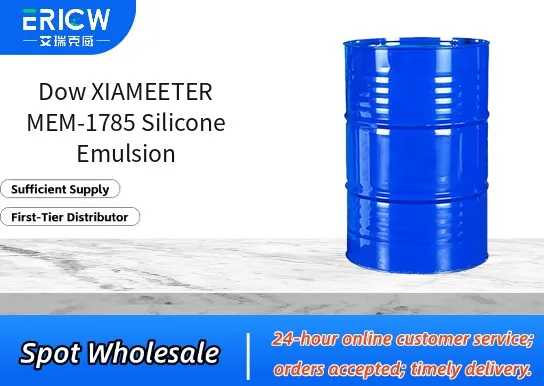
Highly stable anionic silicone emulsion with excellent shelf life under ambient storage conditions.
Provides superior lubricity and surface slip without compromising adhesion in coating systems.
Low foaming profile suitable for high-shear industrial processing and inline dilution.
Compatible with a broad range of water-based formulations including acrylics, polyurethanes, and styrene-butadiene polymers.
Enables consistent film formation and improved substrate wetting on porous and non-porous surfaces.
Textile finishing agents for softness, smoothness, and anti-static performance.
Water-based architectural coatings to enhance mar resistance and leveling.
Printing ink additives for improved rub resistance and gloss uniformity.
Paper and board coatings to reduce surface friction and improve runnability on converting equipment.
Leather finishing systems for enhanced grain definition and tactile softness.
| Chemical Type | Dimethyl silicone polymer emulsion (anionic) |
| Product Form | Opaque white liquid |
| Appearance | Homogeneous, low-viscosity emulsion |
| pH (1% aqueous solution) | 6.0 – 7.5 |
| Active Content (wt%) | 30 ± 1% |
| Density (at 25°C) | 0.98 – 1.02 g/cm³ |
| Particle Size (D50) | 0.15 – 0.30 µm |
| Freeze-Thaw Stability | Pass (after 3 cycles at -5°C / 25°C) |
Q1: What is the primary function of MEM-1785 in coating and ink formulations?
A: MEM-1785 is a non-ionic, anionic-stabilized silicone emulsion designed to provide surface tension reduction, improved substrate wetting, enhanced leveling, and reduced pinholing—particularly in water-based architectural coatings, industrial finishes, and flexographic or gravure inks.
Q2: Is MEM-1785 compatible with common water-based polymer systems such as acrylics, vinyl acetate copolymers, and styrene-butadiene dispersions?
A: Yes, MEM-1785 exhibits broad compatibility with typical waterborne resin systems. It is formulated for stable incorporation without causing coagulation or viscosity instability when added during the let-down stage, provided standard addition protocols and pH conditions (typically pH 6–9) are maintained.
Q3: How should MEM-1785 be incorporated into a formulation to ensure optimal performance and stability?
A: It is recommended to add MEM-1785 during the final let-down stage, after pigments and thickeners have been dispersed, under moderate agitation. Avoid high-shear mixing post-addition and minimize exposure to strong electrolytes or extreme pH shifts to preserve emulsion integrity.
Q4: Does MEM-1785 contribute to foam generation or affect defoamer selection in formulations?
A: While MEM-1785 itself is not highly foaming, its surface-active nature may influence foam behavior. Formulators should evaluate foam control holistically and may need to adjust defoamer type or dosage—especially when combining with other surfactants or high-shear processing steps.
Contact With Us:
E-mail: wangxingqiang@ericwchem.com
Have a Questions? Call Us:
Add:
Building A1, Jiete Industrial Park, Huangpu District, Guangzhou City, Guangdong Province, China