English
 Español
 tiếng việt
 русский
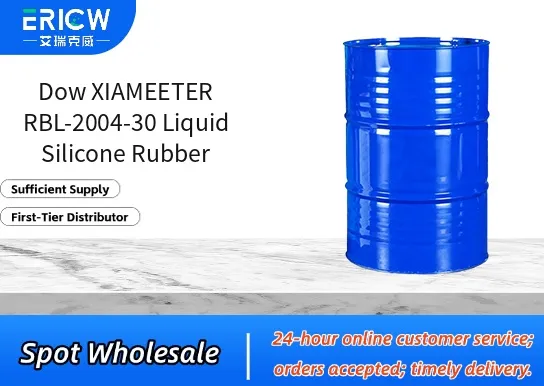
High biocompatibility, compliant with ISO 10993 and USP Class VI standards for medical device applications.
Excellent flowability and low viscosity for precise mold filling and intricate part replication.
Fast room-temperature or heat-cure kinetics enabling efficient high-volume production cycles.
Superior mechanical properties including high tear strength and elongation at break after curing.
Outstanding thermal stability with continuous service capability from –60 °C to +200 °C.
Medical-grade tubing and catheters requiring flexibility and sterilization resistance.
Implantable soft-tissue simulants and anatomical models for surgical training.
Seals, gaskets, and encapsulation components in diagnostic equipment.
Wearable health sensor housings and skin-contact interfaces.
Pharmaceutical processing components exposed to repeated autoclaving.
| Chemical Type | Platinum-cured addition-cure liquid silicone rubber (LSR) |
| Product Form | Two-part (Part A + Part B) liquid system |
| Appearance | Clear, low-viscosity liquid (Part A); colorless to pale yellow liquid (Part B) |
| Primary Applications | Medical devices, healthcare wearables, diagnostic equipment components |
| Key Features | Biocompatible, low extractables, excellent dimensional stability |
| Benefits | Reduced post-cure processing, consistent batch-to-batch performance, FDA-compliant formulation |
| Curing Method | Heat cure (typically 110–150 °C) or accelerated RT cure with catalyst activation |
| Shelf Life | 12 months unopened at ≤25 °C, protected from moisture and direct sunlight |
Q1: What is the typical cure profile for Dow XIAMEETER RBL-2004-30?
A: RBL-2004-30 is a platinum-catalyzed LSR designed for fast, efficient curing at elevated temperatures. Typical molding conditions range from 110–170 °C, with cycle times varying based on part geometry and thermal mass. Post-curing may be applied to enhance physical properties and extract residual volatiles, depending on end-use requirements.
Q2: Is RBL-2004-30 suitable for medical or food-contact applications?
A: RBL-2004-30 is formulated to meet general biocompatibility expectations for elastomeric silicone materials. It is intended for use in applications where regulatory compliance—such as USP Class VI, ISO 10993, or FDA 21 CFR 177.2600—is required; however, final compliance depends on full formulation, processing conditions, and finished-part validation by the manufacturer.
Q3: How should RBL-2004-30 be handled and stored to maintain stability?
A: Store unopened containers in a cool, dry place below 25 °C and away from direct sunlight, moisture, and sources of platinum contamination (e.g., latex gloves, certain adhesives, or sulfur-containing materials). Once opened, minimize exposure to ambient air and ensure tight resealing. Avoid freezing, and allow material to equilibrate to room temperature before use.
Q4: Can RBL-2004-30 be overmolded onto thermoplastics or other substrates?
A: Yes, RBL-2004-30 demonstrates good adhesion to many engineered thermoplastics—including polypropylene, polycarbonate, and PBT—when appropriate surface preparation (e.g., plasma treatment or primer application) and optimized molding parameters are used. Adhesion performance must be validated per specific substrate and process configuration.
Contact With Us:
E-mail: wangxingqiang@ericwchem.com
Have a Questions? Call Us:
Add:
Building A1, Jiete Industrial Park, Huangpu District, Guangzhou City, Guangdong Province, China