English
 Español
 tiếng việt
 русский
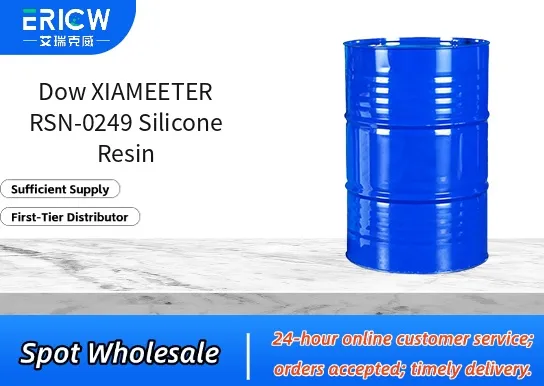
High thermal stability with continuous service temperature up to 200 °C.
Excellent electrical insulation properties, including low dielectric constant and dissipation factor.
Good compatibility with organic resins and pigments for hybrid formulation systems.
Low volatile organic compound (VOC) content, supporting sustainable coating and encapsulation processes.
Fast cure profile under moderate heat, enabling high-throughput industrial processing.
High-performance heat-resistant coatings for automotive exhaust components.
Electrical insulation varnishes for motors, transformers, and magnet wire.
Matrix resin in silicone-based composite materials for aerospace structural parts.
Encapsulants and potting compounds for power electronics and LED modules.
Binder in high-temperature ceramic and refractory coatings.
| Chemical Type | Methyl-phenyl silicone resin |
| Product Form | Clear to pale yellow liquid |
| Appearance | Homogeneous, low-viscosity liquid |
| Primary Applications | Heat-resistant coatings, electrical insulation, encapsulation |
| Key Features | Thermally stable, electrically insulating, low-VOC, heat-curable |
| Benefits | Enhanced durability at elevated temperatures, improved dielectric performance, formulation flexibility |
| Solvent System | Aromatic hydrocarbon blend (e.g., xylene/toluene) |
| Storage Stability | 12 months at 5–30 °C in sealed container |
Q1: What is the primary function of XIAMEETER RSN-0249 in coating formulations?
A: XIAMEETER RSN-0249 is a methyl-phenyl silicone resin designed to enhance thermal stability, weather resistance, and surface hardness in high-performance industrial coatings—particularly for metal substrates exposed to elevated temperatures or harsh environmental conditions.
Q2: Is XIAMEETER RSN-0249 compatible with organic resin systems such as acrylics or polyesters?
A: Yes, it demonstrates good compatibility with many thermosetting organic resins when properly dispersed or pre-reacted. Compatibility should be confirmed experimentally in the final formulation, as performance depends on resin polarity, molecular weight, and processing conditions.
Q3: How is XIAMEETER RSN-0249 typically incorporated into a coating system?
A: It is commonly added during the let-down or grinding stage, either as a solution in aromatic or ketonic solvents, or as a molten blend. Good dispersion and controlled addition rate help ensure uniform distribution and optimal film formation.
Q4: Does XIAMEETER RSN-0249 require heat curing to develop its full performance benefits?
A: While it can contribute functionality in ambient-cure systems, its thermal stability and crosslink density are maximized under elevated temperature cure conditions—typically above 150 °C—making it especially suitable for baked enamel applications.
Contact With Us:
E-mail: wangxingqiang@ericwchem.com
Have a Questions? Call Us:
Add:
Building A1, Jiete Industrial Park, Huangpu District, Guangzhou City, Guangdong Province, China