English
 Español
 tiếng việt
 русский
High thermal stability up to 250 °C continuous service temperature
Excellent electrical insulation properties with low dielectric loss
Good compatibility with organic resins and pigment systems
Low viscosity liquid form enabling easy processing and formulation
Hydrophobic surface character providing moisture resistance
Heat-resistant coatings for industrial ovens and exhaust systems
Electrical insulating varnishes for motor windings and transformers
Binders in high-temperature ceramic and refractory coatings
Component in hybrid silicone-organic topcoats for architectural metal substrates
Matrix resin for flame-retardant composites in transportation interiors
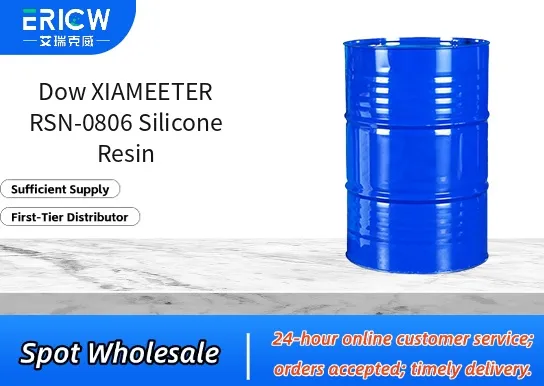
| Chemical Type | Methyl-phenyl silicone resin |
| Product Form | Clear, low-viscosity liquid |
| Appearance | Colorless to pale yellow, transparent |
| Primary Applications | High-temperature coatings, electrical insulation, hybrid binders |
| Key Features | Thermal stability, dielectric performance, formulation flexibility |
| Benefits | Extended service life under thermal cycling, reduced coating cracking, improved adhesion to metals |
| Volatile Content (wt%) | ≤5% (as received) |
| Specific Gravity (25 °C) | 1.02–1.06 |
Q1: What is the primary function of XIAMEETER RSN-0806 in coating formulations?
A: XIAMEETER RSN-0806 is a methyl-phenyl silicone resin designed to enhance thermal stability, weather resistance, and surface hardness in high-performance industrial coatings—particularly for metal substrates exposed to elevated temperatures or harsh environmental conditions.
Q2: Is XIAMEETER RSN-0806 compatible with organic resin systems such as acrylics or polyesters?
A: Yes, it demonstrates good compatibility with many thermosetting organic resins—including acrylics, alkyds, and polyester-based systems—when properly dispersed. Compatibility should be confirmed through lab-scale blending trials, especially when used above typical dosage levels.
Q3: How is XIAMEETER RSN-0806 typically incorporated into a formulation?
A: It is generally added during the let-down or post-addition stage under moderate shear, often dissolved or pre-dispersed in aromatic or high-boiling oxygenated solvents. Processing temperature should remain below its softening point to avoid premature crosslinking.
Q4: Does XIAMEETER RSN-0806 require a catalyst to cure in thermoset systems?
A: While it can undergo thermal self-condensation at elevated temperatures, optimal crosslink density and performance are typically achieved when used in conjunction with conventional curing agents—such as melamine-formaldehyde resins or blocked isocyanates—depending on the base system.
Contact With Us:
E-mail: wangxingqiang@ericwchem.com
Have a Questions? Call Us:
Add:
Building A1, Jiete Industrial Park, Huangpu District, Guangzhou City, Guangdong Province, China