English
 Español
 tiếng việt
 русский
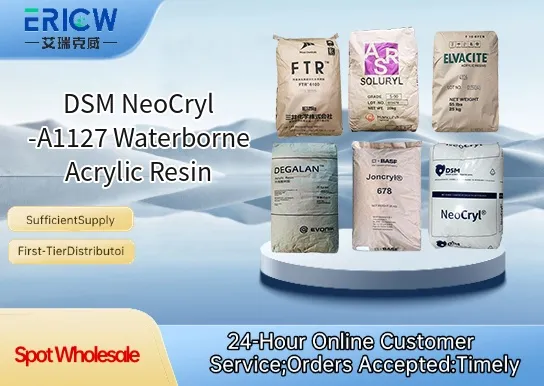
Low-VOC, environmentally compliant formulation meeting stringent global regulatory requirements.
Excellent film formation at ambient temperature without coalescing agents.
Superior water resistance and scrub resistance in cured films.
Good compatibility with common waterborne additives and crosslinkers.
Stable viscosity profile over broad pH range (7.5–9.0) and extended storage life.
Architectural interior and exterior wall paints.
Industrial maintenance coatings for metal substrates.
Wood coatings requiring clarity, hardness, and yellowing resistance.
Plastic coatings for ABS, PVC, and polycarbonate substrates.
Waterborne can and coil coating base resins.
| Chemical Type | Acrylic copolymer dispersion |
| Product Form | White to slightly bluish translucent liquid |
| Appearance | Homogeneous aqueous dispersion |
| Solids Content (wt%) | 48.0 ± 1.0% |
| pH | 8.0 – 8.8 |
| Viscosity (mPa·s, Brookfield RVT, #2 spindle, 20 rpm) | 150 – 350 |
| Minimum Film Formation Temperature (MFFT) | ≈ 15 °C |
| Primary Applications | High-performance waterborne architectural and industrial coatings |
Q1: What is the primary application domain for NeoCryl A1127?
A: NeoCryl A1127 is primarily formulated into high-performance waterborne industrial coatings—especially for metal substrates requiring excellent corrosion resistance, hardness, and gloss retention under ambient or low-bake conditions.
Q2: Can NeoCryl A1127 be used in combination with crosslinkers?
A: Yes—it is designed to accept common ambient-cure crosslinkers such as melamine-formaldehyde resins, aziridines, and carbodiimides, enabling enhanced chemical resistance and mechanical durability without thermal curing.
Q3: How does NeoCryl A1127 perform in terms of film formation and coalescence?
A: It forms continuous, high-gloss films at room temperature with good coalescence behavior, even at relatively low minimum film formation temperatures—making it suitable for formulations targeting low-VOC, ambient-dry applications.
Q4: Is NeoCryl A1127 compatible with pigments and additives commonly used in industrial coatings?
A: Yes—it demonstrates good compatibility with a broad range of inorganic and organic pigments, dispersants, rheology modifiers, and defoamers typically employed in waterborne industrial coating systems.
Q5: What are the key handling and storage recommendations?
A: Store in tightly sealed containers at temperatures between 5–30 °C, avoid freezing, and protect from prolonged exposure to direct sunlight. Stir gently before use to ensure homogeneity without introducing excessive air.
Contact With Us:
E-mail: wangxingqiang@ericwchem.com
Have a Questions? Call Us:
Add:
Building A1, Jiete Industrial Park, Huangpu District, Guangzhou City, Guangdong Province, China