English
 Español
 tiếng việt
 русский
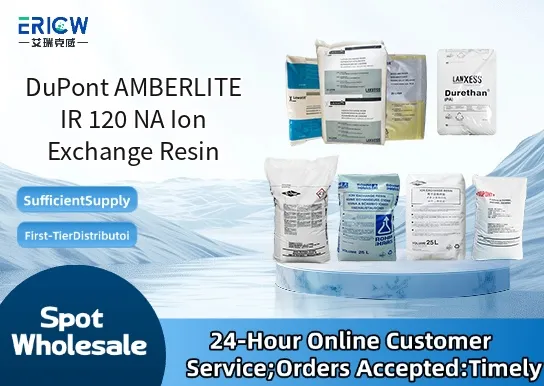
Sulfonic acid functionalized strong-acid cation exchange resin in sodium form (Na⁺).
High chemical and thermal stability suitable for repeated regeneration cycles.
Uniform spherical beads with excellent physical strength and low attrition rate.
Optimized particle size distribution for low pressure drop and high flow capacity.
USP Class VI compliant, meeting stringent requirements for pharmaceutical and food-grade water softening.
Industrial boiler feedwater softening to prevent scale formation.
Purification of process water in pharmaceutical manufacturing.
Pre-treatment for reverse osmosis (RO) systems in power generation facilities.
Food and beverage processing, including sugar decolorization support and ingredient water conditioning.
Lab-scale and pilot-plant ion exchange studies for cation removal and process development.
| Chemical Type | Strong-acid cation exchange resin (sulfonated polystyrene-divinylbenzene copolymer) |
| Product Form | Sodium form (Na⁺) |
| Appearance | Amber, spherical beads |
| Functional Group | Sulfonic acid (–SO₃H) |
| Ion Exchange Capacity (min) | 1.8 meq/mL (wet) |
| Moisture Content | 45–50% (as shipped) |
| Particle Size Range | 0.3–1.2 mm |
| Uniformity Coefficient (max) | 1.6 |
Q1: What is the primary functional form of AMBERLITE IR 120 NA resin?
A: AMBERLITE IR 120 NA is supplied in the sodium (Na⁺) form, making it suitable for softening applications where calcium and magnesium ions are exchanged for sodium ions in aqueous streams.
Q2: Can IR 120 NA be used in food-grade or potable water treatment systems?
A: Yes — when operated and regenerated according to applicable regulatory guidelines and manufacturer recommendations, IR 120 NA is commonly employed in food processing, beverage production, and municipal or residential drinking water softening systems.
Q3: How is the resin regenerated after exhaustion?
A: Regeneration is typically performed using a brine solution (sodium chloride), which restores the resin’s exchange capacity by displacing accumulated hardness ions with sodium ions. Regeneration efficiency depends on brine concentration, flow rate, contact time, and bed depth.
Q4: Is IR 120 NA compatible with high-temperature process streams?
A: The resin is designed for operation at ambient to moderately elevated temperatures; continuous use above 120 °C is not recommended, as thermal degradation may reduce capacity and mechanical stability over time.
Contact With Us:
E-mail: wangxingqiang@ericwchem.com
Have a Questions? Call Us:
Add:
Building A1, Jiete Industrial Park, Huangpu District, Guangzhou City, Guangdong Province, China