English
 Español
 tiếng việt
 русский
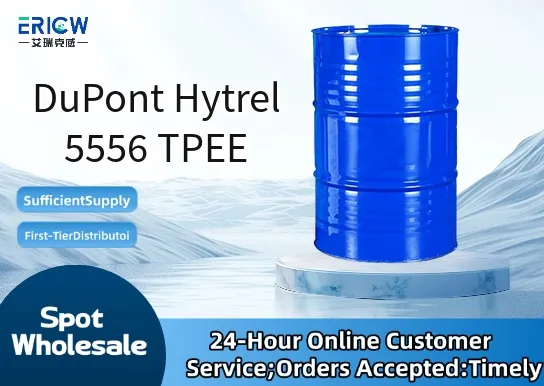
Excellent balance of toughness and flexibility across a wide temperature range (–40 °C to 150 °C short-term)
Outstanding resistance to oils, greases, and many common automotive fluids
High melt strength and excellent processability in injection molding and extrusion
Good UV and weather resistance with inherent hydrolytic stability
Low compression set for reliable dynamic sealing performance
Automotive air ducts and charge-air coolers
Fuel system components including quick-connect couplings and fuel lines
Powertrain mounts and vibration-damping bushings
Industrial fluid-handling hoses and connectors
Consumer appliance parts requiring fatigue resistance and thermal resilience
| Chemical Type | Thermoplastic polyester elastomer (TPEE) |
| Product Form | Pellets |
| Appearance | Off-white to light tan, semi-crystalline granules |
| Primary Applications | Dynamic structural components, fluid handling, under-hood automotive parts |
| Key Features | Toughness, oil resistance, thermal stability, recyclability |
| Processing Methods | Injection molding, extrusion, blow molding |
| Density (ASTM D792) | 1.18 g/cm³ |
| Melt Flow Rate (230 °C/2.16 kg, ASTM D1238) | 25 g/10 min |
Q1: What are the key mechanical advantages of Hytrel 5556 compared to other TPEEs or thermoplastic elastomers?
A: Hytrel 5556 offers an exceptional balance of high tensile strength, excellent fatigue resistance, and superior recovery after repeated flexing—making it especially suitable for dynamic applications such as automotive bellows, powertrain components, and industrial hoses where long-term dimensional stability under cyclic stress is critical.
Q2: Can Hytrel 5556 be processed using standard thermoplastic equipment, and are there any special drying or processing recommendations?
A: Yes, Hytrel 5556 is compatible with conventional injection molding, extrusion, and blow molding equipment. It requires thorough drying prior to processing—typically at 80–100 °C for 2–4 hours—to minimize moisture-related defects. Melt temperatures generally range between 240–270 °C, depending on part geometry and cycle requirements.
Q3: How does Hytrel 5556 perform in environments with exposure to oils, greases, and common automotive fluids?
A: Hytrel 5556 exhibits outstanding resistance to a broad range of hydrocarbons, lubricants, and automotive fluids—including engine oil, transmission fluid, and brake fluid—retaining its mechanical integrity and elasticity significantly longer than many conventional TPEs or soft PVC compounds.
Q4: Is Hytrel 5556 suitable for applications requiring regulatory compliance for food contact or medical devices?
A: Hytrel 5556 is not pre-qualified for direct food-contact or implantable medical applications. While certain Hytrel grades meet FDA or ISO 10993 requirements, qualification for specific end-use conditions must be evaluated case by case—users should consult DuPont’s regulatory documentation and conduct appropriate testing for their intended application.
Contact With Us:
E-mail: wangxingqiang@ericwchem.com
Have a Questions? Call Us:
Add:
Building A1, Jiete Industrial Park, Huangpu District, Guangzhou City, Guangdong Province, China