English
 Español
 tiếng việt
 русский
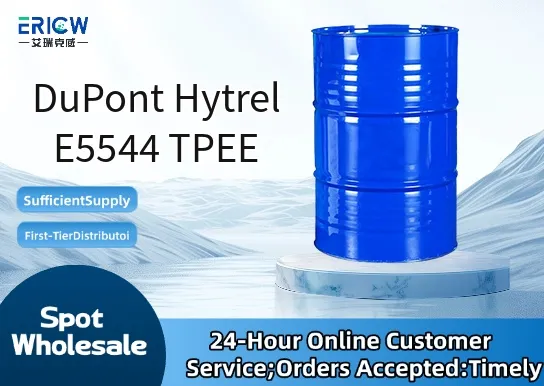
Excellent balance of strength, flexibility, and resilience across a wide temperature range (–40 °C to 150 °C short-term).
Outstanding resistance to hydrolysis, oils, greases, and many common automotive fluids.
High melt flow index enabling efficient processing via injection molding and extrusion.
Good UV stability and inherent low-temperature impact toughness.
Recyclable thermoplastic elastomer with no vulcanization required.
Automotive air ducts and HVAC components requiring dimensional stability under thermal cycling.
Power tool housings and grips demanding high impact resistance and ergonomic soft-touch feel.
Industrial fluid handling hoses and couplings exposed to hydraulic oils and glycol-based coolants.
Consumer appliance parts such as dishwasher pump impellers and washing machine door seals.
Medical device tubing and connectors where biocompatibility (ISO 10993-compliant grades available) and kink resistance are critical.
| Chemical Type | Thermoplastic Polyester Elastomer (TPEE) |
| Product Form | Pellets |
| Appearance | Off-white to light tan, uniform cylindrical pellets |
| Primary Applications | Dynamic mechanical parts, fluid-contact components, structural elastomeric elements |
| Key Features | High tensile strength, excellent fatigue resistance, low compression set |
| Processing Method | Injection molding, extrusion, blow molding |
| Density (ASTM D792) | 1.21 g/cm³ |
| Melt Flow Rate (230 °C/2.16 kg, ASTM D1238) | 25 g/10 min |
Q1: What are the key mechanical advantages of Hytrel E5544 compared to other TPEEs?
A: Hytrel E5544 offers an optimized balance of high tensile strength, excellent resilience, and superior fatigue resistance—particularly under dynamic loading and repeated flexing. Its unique polyester-ether molecular architecture delivers greater toughness and elongation at break than many standard TPEEs, especially in thin-wall or highly stressed components.
Q2: Is Hytrel E5544 suitable for applications requiring exposure to oils, greases, or common automotive fluids?
A: Yes—Hytrel E5544 exhibits notably improved resistance to non-polar hydrocarbons, lubricating oils, and brake fluids compared to many thermoplastic elastomers. While long-term immersion performance depends on temperature and fluid composition, it is routinely selected for under-hood seals, grommets, and fluid-handling components where moderate chemical resistance is required.
Q3: How does processing Hytrel E5544 differ from conventional polyesters or polyamides?
A: Hytrel E5544 processes more like a thermoplastic than a reactive polymer—it can be injection molded, extruded, or blow molded using standard equipment. Unlike rigid polyesters or nylons, it requires lower melt temperatures and shorter cycle times due to its inherent elasticity and lower crystallization kinetics. Drying is essential, but residence time sensitivity is reduced relative to engineering thermoplastics with higher thermal degradation risk.
Q4: Can Hytrel E5544 be overmolded onto other substrates such as PP, ABS, or metals?
A: Yes—Hytrel E5544 demonstrates good adhesion to a range of thermoplastics and metal surfaces when appropriate mold design, surface preparation, and process parameters (e.g., melt temperature, mold temperature, and bonding time) are applied. Bond strength is enhanced through mechanical interlock and interdiffusion, particularly with semi-crystalline substrates like PP or PA6, though adhesive primers may be used for demanding structural overmolding applications.
Contact With Us:
E-mail: wangxingqiang@ericwchem.com
Have a Questions? Call Us:
Add:
Building A1, Jiete Industrial Park, Huangpu District, Guangzhou City, Guangdong Province, China