English
 Español
 tiếng việt
 русский
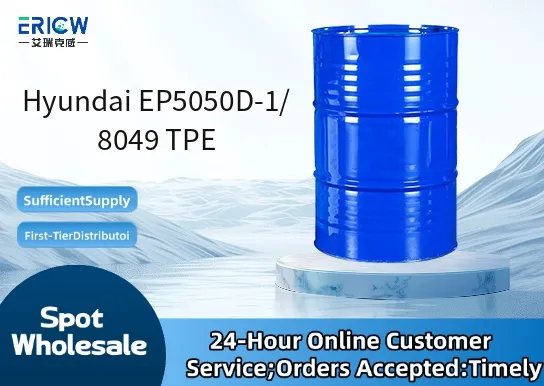
Thermoplastic elastomer (TPE) based on styrenic block copolymer (SBC) architecture for excellent processability and recyclability.
Soft-touch surface finish with balanced hardness (Shore A 50) and high elasticity for enhanced user comfort and grip.
Good resistance to UV exposure, ozone, and common household chemicals—suitable for both indoor and outdoor applications.
Low extractables and compliant with FDA 21 CFR §177.2600 for indirect food contact applications.
Easy to color and bond with polypropylene (PP), polyethylene (PE), and ABS via overmolding or co-extrusion.
Overmolded grips for power tools, hand-held appliances, and medical devices.
Seals and gaskets for automotive interior components including door trims and control knobs.
Consumer electronics housings and protective cases requiring soft-skin aesthetics and impact absorption.
Household appliance components such as detergent dispenser levers, water filter handles, and control dials.
Personal care product casings—including toothbrush handles, shaver grips, and cosmetic tool accessories.
| Chemical Type | Styrenic Thermoplastic Elastomer (SBC-based) |
| Product Form | Natural pellet form, free-flowing, ready for injection molding and extrusion |
| Appearance | Opaque off-white granules |
| Shore Hardness (A Scale) | 50 ± 3 |
| Melt Flow Rate (200°C/5 kg) | 12–16 g/10 min |
| Density | 0.99–1.01 g/cm³ |
| Primary Applications | Overmolding, soft-touch components, seals & gaskets |
| Key Features | Soft-touch feel, PP/PE compatibility, low VOC emission, FDA-compliant |
Q1: What is the primary application domain for Hyundai EP5050D-1/8049 TPE?
A: This thermoplastic elastomer is primarily engineered for soft-touch overmolding and functional sealing applications in automotive interior components, including control knobs, trim bezels, and tactile switches—where balanced elasticity, surface aesthetics, and adhesion to polypropylene or ABS substrates are critical.
Q2: How does EP5050D-1/8049 perform in terms of processability on standard injection molding equipment?
A: It exhibits excellent melt stability and low viscosity at typical processing temperatures, enabling smooth filling of thin-walled and complex geometries without excessive shear degradation. Drying is recommended prior to processing to maintain optimal mechanical consistency and surface quality.
Q3: Is this grade suitable for applications requiring resistance to common automotive interior chemicals?
A: Yes—it demonstrates good resistance to typical interior exposure agents such as diluted cleaning solutions, skin oils, and low-concentration alcohol-based wipes under normal use conditions. Long-term resistance to aggressive solvents or high-concentration formulations should be verified through application-specific testing.
Q4: What type of substrate adhesion can be expected when overmolding onto PP or ABS?
A: EP5050D-1/8049 is formulated to achieve strong interfacial bonding with polypropylene and ABS without requiring primers or surface activation—provided that mold temperature, melt temperature, and injection speed are optimized within typical TPE processing windows.
Contact With Us:
E-mail: wangxingqiang@ericwchem.com
Have a Questions? Call Us:
Add:
Building A1, Jiete Industrial Park, Huangpu District, Guangzhou City, Guangdong Province, China