English
 Español
 tiếng việt
 русский
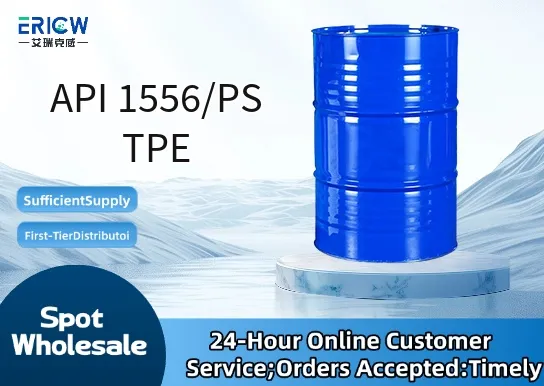
Thermoplastic elastomer based on styrenic block copolymer (SBC) blended with polyolefin for balanced processability and elasticity.
Excellent melt flow stability for consistent extrusion, injection molding, and overmolding operations.
Good resistance to UV exposure and thermal aging without requiring additional stabilizer packages.
Low compression set (<25% at 70°C, 22h) enabling reliable sealing performance in dynamic applications.
Halogen-free formulation compliant with RoHS and REACH directives for regulated markets.
Soft-touch grips for power tools and hand-held industrial equipment.
Sealing rings and gaskets in fluid handling systems for HVAC and pneumatic components.
Overmolded protective caps and end caps for automotive sensor housings.
Flexible bellows and dust boots in precision motion control assemblies.
Consumer electronics enclosures requiring tactile feedback and impact absorption.
| Chemical Type | Styrenic Thermoplastic Elastomer (PS-based SBC/PO blend) |
| Product Form | Natural color pellets, free-flowing, standard 3–4 mm diameter |
| Appearance | Opaque off-white to light beige granules |
| Hardness (Shore A, ASTM D2240) | 85 ± 3 |
| Density (g/cm³, ASTM D792) | 0.98–1.01 |
| Melt Flow Rate (g/10 min, 200°C/5 kg, ASTM D1238) | 12–16 |
| Continuous Use Temperature Range | −40°C to +70°C |
| Primary Applications | Overmolding, sealing, soft-touch components, dynamic flex parts |
Q1: What is the primary function of API 1556/PS TPE in polymer formulations?
A: API 1556/PS TPE is a thermoplastic elastomer modifier designed to enhance flexibility, impact resistance, and melt processability—particularly in polystyrene (PS) and styrenic-based blends. It functions as a compatibilizer and soft-phase dispersant, enabling improved mechanical balance without compromising thermal stability during extrusion or injection molding.
Q2: Is API 1556/PS TPE suitable for food-contact applications?
A: API 1556/PS TPE is not pre-certified for food-contact use. Its suitability depends on final formulation, processing conditions, and regulatory review by the end-user. Customers intending food-contact applications must conduct full compliance testing—including extractables and migration evaluation—against applicable regional requirements.
Q3: How does API 1556/PS TPE differ from conventional SEBS or TPR modifiers?
A: Unlike generic SEBS or TPR grades, API 1556/PS TPE is specifically engineered for compatibility with general-purpose and high-impact polystyrene matrices. It offers optimized rheological behavior during melt blending and delivers more consistent phase dispersion, resulting in reduced haze and improved surface finish in transparent or colored PS applications.
Q4: What processing methods are recommended for incorporating API 1556/PS TPE?
A: API 1556/PS TPE is compatible with standard thermoplastic processing techniques, including twin-screw extrusion, injection molding, and compounding. For optimal dispersion, it is typically introduced downstream of the main PS feed zone in extruders and processed at temperatures within the standard PS thermal window—avoiding prolonged residence above 220 °C to maintain molecular integrity.
Q5: What is the typical dosage range for API 1556/PS TPE in PS-based compounds?
A: Dosage is formulation-dependent, but API 1556/PS TPE is generally used at low concentrations—typically ranging from 0.1% to 2% by weight—to achieve noticeable improvements in toughness and ductility. Higher loadings may be explored for specialized impact-modified grades, though they require careful evaluation of stiffness–toughness trade-offs and melt viscosity effects.
Contact With Us:
E-mail: wangxingqiang@ericwchem.com
Have a Questions? Call Us:
Add:
Building A1, Jiete Industrial Park, Huangpu District, Guangzhou City, Guangdong Province, China