English
 Español
 tiếng việt
 русский
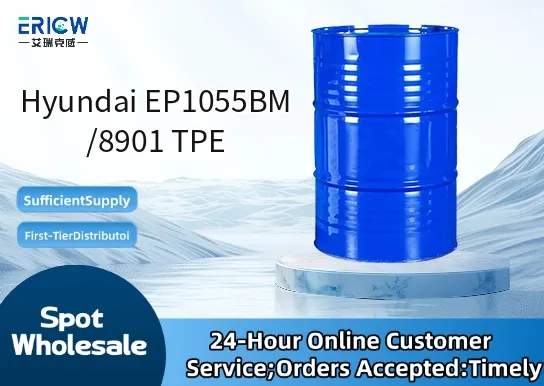
Excellent soft-touch feel with balanced hardness (Shore A 55) for ergonomic and aesthetic design.
Good processability via injection molding and extrusion, enabling high-volume manufacturing with low cycle times.
Enhanced UV resistance and thermal stability up to 100°C continuous service temperature.
Low extractables and compliant with FDA 21 CFR §177.2600 for indirect food-contact applications.
Recyclable thermoplastic elastomer offering sustainability advantages over vulcanized rubber.
Automotive interior trim components including door panels, gear knobs, and instrument cluster bezels.
Consumer electronics housings and protective overmolds for power tools, toothbrushes, and wearable devices.
Medical device grips and non-invasive patient interface components requiring biocompatibility and cleanability.
Household appliance seals, gaskets, and soft-touch control surfaces for kitchen and laundry equipment.
Industrial tool handles and ergonomic grips demanding slip resistance and long-term fatigue performance.
| Chemical Type | Styrenic Thermoplastic Elastomer (TPE-S) |
| Product Form | Pellets |
| Appearance | Translucent off-white granules |
| Shore Hardness (A Scale) | 55 ± 3 |
| Melt Flow Rate (200°C/5 kg) | 15–20 g/10 min |
| Density | 0.90–0.92 g/cm³ |
| Key Features | Soft-touch, recyclable, easy processing, UV-stabilized |
| Primary Applications | Overmolding, soft-grip components, seals & gaskets |
Q1: What is the primary function of Hyundai EP1055BM/8901 TPE in polymer formulations?
A: EP1055BM/8901 is a thermoplastic elastomer designed to enhance melt processability, improve impact resistance, and provide flexible yet durable phase morphology when blended with rigid thermoplastics such as PP or ABS—commonly used as a compatibilizer or soft-phase modifier in multi-component systems.
Q2: Is EP1055BM/8901 suitable for applications requiring food contact compliance?
A: While EP1055BM/8901 is formulated without intentionally added heavy metals or known SVHCs, it is not pre-certified to any specific food-contact regulation. End-use compliance must be verified by the compounder or converter through full formulation testing and regulatory assessment under applicable regional requirements.
Q3: How should EP1055BM/8901 be dried prior to processing?
A: To ensure optimal melt stability and minimize surface defects, it is recommended to dry EP1055BM/8901 at 70–80 °C for 2–4 hours using desiccant-assisted drying. Moisture content should be maintained below 0.05% before extrusion or injection molding.
Q4: Can EP1055BM/8901 be used in overmolding applications?
A: Yes—its balanced melt viscosity and good adhesion to common engineering thermoplastics (e.g., PP, PS, and certain nylons) make EP1055BM/8901 well-suited for two-shot or insert overmolding, especially where tactile softness, grip enhancement, or vibration damping is required.
Contact With Us:
E-mail: wangxingqiang@ericwchem.com
Have a Questions? Call Us:
Add:
Building A1, Jiete Industrial Park, Huangpu District, Guangzhou City, Guangdong Province, China