English
 Español
 tiếng việt
 русский
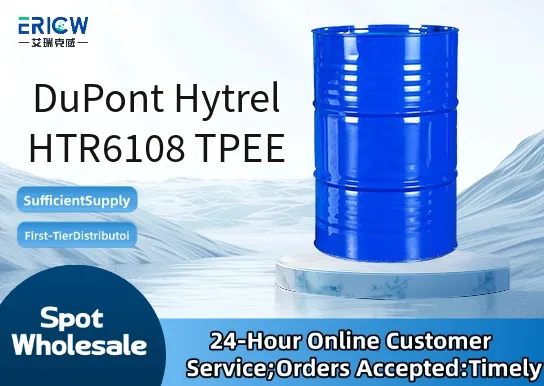
High-temperature resistance with continuous use up to 150 °C
Excellent mechanical resilience and fatigue resistance under dynamic loading
Outstanding hydrolytic stability in hot, humid environments
Broad chemical resistance including oils, greases, and many automotive fluids
Good processability via injection molding and extrusion without pre-drying
Automotive under-hood components such as air ducts and sensor housings
Industrial power transmission belts and timing belt covers
Oil and gas downhole tool components requiring thermal and chemical robustness
High-performance sporting goods parts subject to repeated impact and flexing
Electrical connectors and cable jacketing for demanding industrial environments
| Chemical Type | Thermoplastic Polyester Elastomer (TPEE) |
| Product Form | Pellets |
| Appearance | Off-white to light beige, free-flowing pellets |
| Primary Applications | High-temperature structural and dynamic components |
| Key Features | Heat resistance, hydrolysis resistance, mechanical toughness |
| Benefits | Long-term dimensional stability, reduced part failure in cyclic service |
| Processing Method | Injection molding, extrusion, blow molding |
| Standard Compliance | ISO 9001 certified manufacturing; RoHS compliant |
Q1: What distinguishes Hytrel HTR6108 from other TPEE grades in the Hytrel portfolio?
A: Hytrel HTR6108 is a high-temperature resistant TPEE grade specifically engineered for enhanced thermal stability and long-term mechanical performance under elevated service temperatures—making it particularly suitable for under-hood automotive components, industrial couplings, and dynamic sealing applications where standard TPEEs may experience premature softening or creep.
Q2: Is Hytrel HTR6108 compatible with common engineering thermoplastics for co-injection or overmolding?
A: Yes—HTR6108 demonstrates good adhesion and interfacial compatibility with polyamide (PA6, PA66), polypropylene (PP), and certain polycarbonate blends when processed under optimized temperature and mold conditions. Adhesion strength depends on surface energy matching, melt temperature control, and part design, and is typically validated through application-specific bonding trials.
Q3: How should Hytrel HTR6108 be dried prior to processing?
A: To ensure optimal melt consistency and mechanical properties, Hytrel HTR6108 must be thoroughly dried before processing. A recommended drying protocol is 4–6 hours at 120 °C using a desiccant dryer with dew point ≤ −40 °C. Inadequate drying may lead to surface defects, reduced tensile strength, and compromised hydrolytic resistance during service.
Q4: Can Hytrel HTR6108 be used in applications requiring repeated flexing at low temperatures?
A: Yes—HTR6108 retains excellent flexibility and impact resistance down to approximately −30 °C, supporting dynamic applications such as flexible hoses, actuator boots, and robotic joint covers that undergo cyclic bending in cold environments. Its low-temperature performance is balanced with high-temperature retention, distinguishing it from conventional TPEEs optimized solely for either end of the thermal spectrum.
Contact With Us:
E-mail: wangxingqiang@ericwchem.com
Have a Questions? Call Us:
Add:
Building A1, Jiete Industrial Park, Huangpu District, Guangzhou City, Guangdong Province, China