English
 Español
 tiếng việt
 русский
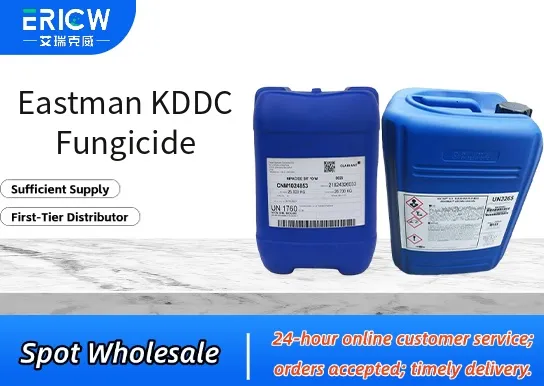
Broad-spectrum activity against key fungal pathogens including Ascomycetes, Basidiomycetes, and Deuteromycetes.
Systemic and protective mode of action with translaminar movement for enhanced leaf coverage and residual control.
Low volatility and favorable environmental profile, supporting sustainable agricultural practices.
Compatible with a wide range of adjuvants and commonly used pesticides in integrated pest management (IPM) programs.
Stable under standard storage conditions and demonstrates consistent performance across varying pH and water hardness levels.
Fruit orchards—including apple, pear, and stone fruit—for control of scab, powdery mildew, and rust.
Vineyards targeting downy and powdery mildew in grape production.
Field crops such as wheat, barley, and corn to manage leaf spots, rusts, and smuts.
Vegetable cultivation—including tomato, cucumber, and pepper—for foliar disease suppression.
Greenhouse ornamentals and nursery stock to prevent botrytis, anthracnose, and other high-humidity pathogens.
| Chemical Type | Strobilurin-class fungicide (active ingredient: Trifloxystrobin) |
| Product Form | Concentrated suspension (SC) |
| Appearance | Off-white to light tan aqueous suspension |
| Primary Applications | Agricultural fungicide for foliar disease control |
| Key Features | Systemic + protective activity; rainfast within 2 hours |
| Benefits | Flexible application timing; resistance management tool in FRAC Group 11 |
| Storage Stability | 24 months at 5–30°C in original unopened container |
| Shelf Life After Dilution | Use within 24 hours of tank mixing |
Q1: What is the primary mode of action of Eastman KDDC Fungicide?
A: Eastman KDDC Fungicide functions as a broad-spectrum contact and protective fungicide, primarily inhibiting fungal spore germination and mycelial growth through disruption of cell membrane integrity and metabolic processes.
Q2: In which types of industrial formulations is Eastman KDDC Fungicide commonly incorporated?
A: It is widely used in water-based industrial coatings, adhesives, sealants, construction materials, and nonwoven fabric treatments where long-term resistance to mold, mildew, and fungal degradation is required under humid or challenging environmental conditions.
Q3: How does Eastman KDDC Fungicide compare to traditional azole or isothiazolinone biocides in terms of stability and compatibility?
A: Eastman KDDC Fungicide offers enhanced hydrolytic and thermal stability compared to many conventional isothiazolinones, and demonstrates good compatibility with common formulation components such as surfactants, thickeners, and acrylic or vinyl acetate-based polymers—though compatibility testing is recommended for each specific system.
Q4: What is the typical dosage range for effective antifungal performance in finished products?
A: Dosage depends on the formulation matrix, expected exposure conditions, and regulatory requirements, but Eastman KDDC Fungicide is typically used at low concentrations—generally ranging from 0.1% to 2% by weight—to achieve robust and persistent antifungal activity.
Contact With Us:
E-mail: wangxingqiang@ericwchem.com
Have a Questions? Call Us:
Add:
Building A1, Jiete Industrial Park, Huangpu District, Guangzhou City, Guangdong Province, China