English
 Español
 tiếng việt
 русский
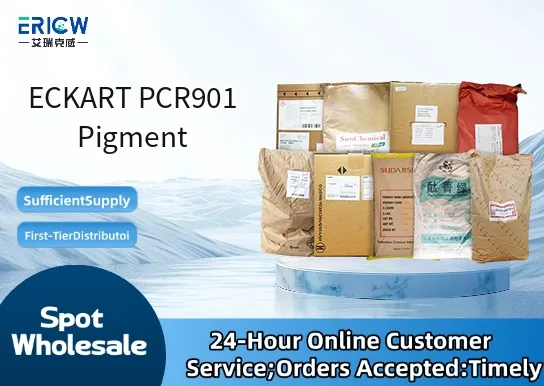
Highly reflective aluminum flake pigment with excellent brightness and metallic effect.
Optimized particle size distribution for superior orientation and smooth film formation.
Surface-treated for enhanced compatibility with solvent-based and UV-curable systems.
Excellent chemical resistance, including resistance to common solvents and weak acids.
Low dust generation during handling, improving workplace safety and process efficiency.
Automotive OEM and refinish coatings requiring high-gloss metallic appearance.
Plastic coatings for consumer electronics housings and decorative trim parts.
Industrial coil coatings for architectural metal panels and appliances.
Printing inks for premium packaging and security applications.
UV-curable wood coatings for furniture and interior design surfaces.
| Chemical Type | Aluminum pigment (flaked) |
| Product Form | Paste in mineral spirits (solvent-based) |
| Appearance | Silvery metallic paste with uniform consistency |
| Primary Applications | High-performance metallic coatings and inks |
| Key Features | Bright, mirror-like reflectivity; excellent leafing behavior |
| Benefits | Consistent color flop, low viscosity impact, easy dispersion |
| Storage Stability | 12 months in original sealed container at 15–25°C |
| VOC Content | Approx. 75% w/w (solvent-based carrier) |
Q1: What is the primary function of ECKART PCR901 Pigment in coating and ink formulations?
A: ECKART PCR901 is a high-performance pearlescent pigment based on synthetic mica, engineered to deliver strong chroma, excellent lightfastness, and a smooth, uniform interference effect. It enhances visual appeal through controlled light reflection and interference, rather than opacity or hiding power.
Q2: Is ECKART PCR901 suitable for use in food-contact coatings or packaging inks?
A: PCR901 is not pre-qualified for direct food-contact applications. Its suitability depends on full formulation compliance with applicable regional regulations (e.g., FDA 21 CFR, EU Plastics Regulation), including migration testing of the final cured system. Customers must validate regulatory compliance at the finished-product level.
Q3: How should ECKART PCR901 be dispersed to achieve optimal optical performance?
A: For best results, disperse PCR901 using low-shear mixing techniques—such as dissolver blades or static mixers—to avoid damaging the delicate platelet structure. High-shear dispersion (e.g., bead mills or ultrasonication) is not recommended, as it may reduce luster and cause particle breakage.
Q4: Can ECKART PCR901 be used in water-based systems?
A: Yes—PCR901 is compatible with both solvent-borne and water-based systems, including acrylic, polyurethane, and alkyd dispersions. Performance may vary depending on pH stability and surfactant selection; compatibility testing in the target formulation is recommended prior to scale-up.
Contact With Us:
E-mail: wangxingqiang@ericwchem.com
Have a Questions? Call Us:
Add:
Building A1, Jiete Industrial Park, Huangpu District, Guangzhou City, Guangdong Province, China