English
 Español
 tiếng việt
 русский
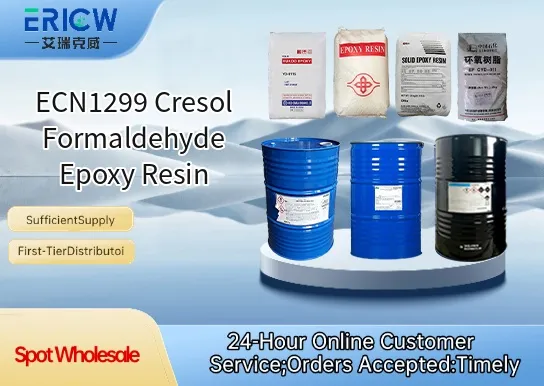
High thermal stability with glass transition temperature (Tg) exceeding 170 °C after full curing.
Excellent chemical resistance to acids, alkalis, and organic solvents in demanding industrial environments.
Superior electrical insulation properties, ideal for high-reliability electronic encapsulation and potting.
Low ionic impurity content, minimizing risk of corrosion in microelectronic packaging applications.
Good adhesion to copper, ceramic, and FR-4 substrates without requiring specialized primers.
Encapsulation of semiconductor devices including ICs, LEDs, and power modules.
Potting compounds for automotive electronics and engine control units (ECUs).
Underfill materials for flip-chip and CSP (chip-scale package) interconnects.
Die-attach adhesives in high-temperature reflow processes.
Matrix resin in advanced printed circuit board (PCB) laminates requiring enhanced thermal performance.
| Chemical Type | Cresol-formaldehyde novolac epoxy resin |
| Product Form | Off-white to light yellow solid pellets or flakes |
| Appearance | Homogeneous granular solid at room temperature |
| Epoxy Equivalent Weight (EEW) | 185–195 g/eq |
| Melting Point | 85–92 °C |
| Softening Point | 88–95 °C (ring-and-ball method) |
| Color (Gardner Scale) | ≤3 |
| Volatiles Content | ≤0.3 wt% (at 150 °C, 2 hrs) |
Q1: What distinguishes ECN1299 from standard bisphenol-A epoxy resins?
A: ECN1299 is a cresol-formaldehyde novolac epoxy resin, offering significantly higher functionality and aromatic density than bisphenol-A types. This results in enhanced thermal stability, chemical resistance, and crosslink density—making it especially suitable for high-performance coatings, encapsulants, and advanced composites where elevated service temperatures are required.
Q2: Is ECN1299 compatible with common epoxy curing agents?
A: Yes, ECN1299 readily reacts with conventional amine hardeners (e.g., dicyandiamide, aromatic diamines), anhydrides, and phenolic resins. Due to its high epoxide content and multifunctionality, stoichiometric ratios and cure schedules may require adjustment compared to standard diglycidyl ether resins—formulation optimization is recommended for target performance.
Q3: How should ECN1299 be handled and stored to maintain stability?
A: Store ECN1299 in tightly sealed containers under dry, cool conditions (below 30 °C) and protected from moisture and direct sunlight. It is hygroscopic and may crystallize at low temperatures; gentle warming to 40–50 °C with uniform agitation restores homogeneity without degradation. Avoid prolonged exposure to ambient humidity during handling.
Q4: Can ECN1299 be used in food-contact or pharmaceutical packaging applications?
A: ECN1299 is not pre-qualified for direct food-contact use. Its suitability for such applications depends on full regulatory assessment—including migration testing and compliance verification by the end-user’s qualified toxicologist—against applicable regional frameworks. It is commonly employed in industrial and electronic applications where regulatory constraints differ.
Contact With Us:
E-mail: wangxingqiang@ericwchem.com
Have a Questions? Call Us:
Add:
Building A1, Jiete Industrial Park, Huangpu District, Guangzhou City, Guangdong Province, China