English
 Español
 tiếng việt
 русский
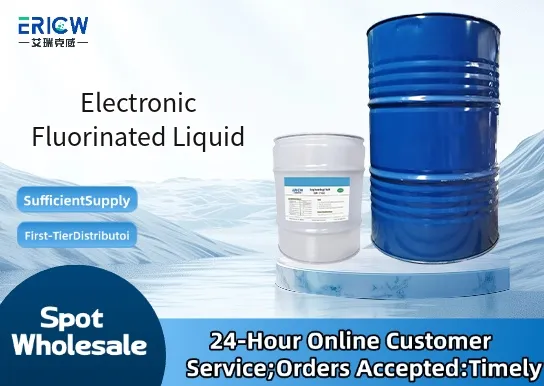
Exceptionally low surface tension and high volatility for rapid, residue-free drying.
Chemically inert toward most metals, elastomers, and electronic substrates—no corrosion or swelling observed.
Non-conductive with volume resistivity >1 × 10¹⁵ Ω·cm, ensuring safe use on powered or sensitive circuitry.
Zero ozone depletion potential (ODP = 0) and ultra-low global warming potential (GWP < 10).
Single-component formulation—no mixing, stabilizers, or additives required for consistent performance.
Final rinse and drying of precision microelectronic components after aqueous cleaning.
Flux residue removal from SMT assemblies without thermal stress or solder mask degradation.
Dielectric testing fluid for high-voltage insulation verification in semiconductor packaging.
Vacuum-compatible cooling medium for thermal management of high-power RF modules.
Carrier solvent for conformal coating deposition and selective edge-lift applications.
| Chemical Type | Perfluoropolyether (PFPE), linear aliphatic structure |
| Product Form | Clear, colorless liquid at room temperature |
| Appearance | Transparent, odorless, non-viscous |
| Melting Point | –65 °C (typical) |
| Boiling Point (at 760 mmHg) | 112–118 °C (range depending on grade) |
| Primary Applications | Electronic cleaning, drying, dielectric testing, thermal transfer |
| Key Features | Non-flammable (ASTM D3278 pass), non-toxic (OECD 404/406 compliant), hydrophobic & oleophobic |
| Regulatory Compliance | REACH registered; RoHS 2.0 compliant; TSCA listed; no SVHCs above threshold |
| Common Compatible Systems | Suitability |
| Batch vapor degreasers (e.g., Precision Cleaning Systems Inc. Model VD-3000) | Highly Recommended – Optimized for full boil-out and condensation rinse cycles |
| Inline spray washers with stainless-steel fluid paths | Recommended – Requires compatible seals (FFKM or Kalrez®); avoid Buna-N or neoprene |
| Ultrasonic immersion tanks (37–45 kHz) | Suitable – Effective at 25–35 °C; no cavitation damage to fine pitch components |
| Automated dispensing systems (e.g., Nordson ASYMTEK) | Highly Recommended – Low viscosity enables precise metering and uniform film formation |
Q1: What is the CAS Registry Number for this product?
A: The base PFPE formulation carries CAS No. 60168-88-9; specific grades are assigned unique CAS identifiers per batch certification.
Q2: Can it be used repeatedly in closed-loop cleaning systems?
A: Yes—exhibits exceptional thermal and hydrolytic stability; typical reuse life exceeds 200 hours in properly maintained vapor degreasers with activated carbon filtration.
Q3: How does it compare to traditional chlorinated solvents like TCE or nPB?
A: Unlike TCE or nPB, it is non-carcinogenic, non-ozone-depleting, and fully compliant with EU VOC directives and U.S. EPA SNAP program requirements—eliminating regulatory reporting burdens and worker exposure controls.
Q4: Is there risk of leaching or migration into conformal coatings or encapsulants?
A: No measurable migration observed under IPC-TM-650 2.6.25 testing; its non-reactive nature prevents plasticization or interfacial diffusion into acrylic, silicone, or urethane coatings.
Contact With Us:
E-mail: wangxingqiang@ericwchem.com
Have a Questions? Call Us:
Add:
Building A1, Jiete Industrial Park, Huangpu District, Guangzhou City, Guangdong Province, China