English
 Español
 tiếng việt
 русский
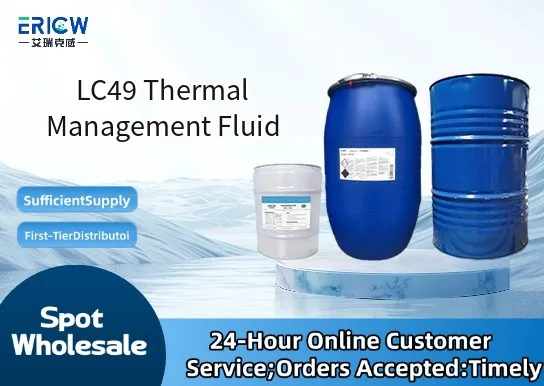
Non-toxic, non-corrosive formulation suitable for long-term exposure to aluminum, copper, and stainless steel components.
Low volatility and high thermal stability (decomposition onset > 280 °C) enabling reliable operation in extended temperature cycles.
Zero ozone depletion potential (ODP = 0) and negligible global warming potential (GWP < 10), compliant with evolving environmental regulations.
Excellent dielectric properties (dielectric strength > 35 kV/mm at 25 °C), certified for use in direct-contact EV battery cooling systems.
Hydrolytically stable with minimal acid number drift (< 0.02 mg KOH/g after 1000 hrs at 120 °C), ensuring consistent system integrity.
Direct-die cooling of high-power IGBT modules and SiC inverters in electric vehicle powertrains.
Thermal management loops for lithium-ion battery packs in automotive and energy storage systems (ESS).
Coolant in liquid cold plates for AI accelerator GPUs and high-density data center server racks.
Heat transfer fluid in low-temperature industrial process chillers requiring non-freezing, non-flammable performance.
Primary coolant in two-phase immersion cooling systems for edge computing hardware.
| Chemical Type | Synthetic hydrofluoroether (HFE)-based blend with proprietary stabilizers |
| Product Form | Clear, colorless liquid |
| Appearance | Transparent, free of sediment or haze |
| Melting Point | –62 °C (ASTM D1217) |
| Boiling Range | 98–104 °C (ASTM D86) |
| Primary Applications | Single-phase & two-phase direct-contact electronics cooling; battery thermal management |
| Key Features | Non-flammable (ASTM D92 flash point > 110 °C), dielectric, low surface tension, low viscosity |
| Regulatory Compliance | REACH registered; RoHS 2015/863 compliant; no SVHCs above 0.1% w/w; FDA indirect food contact compliant (21 CFR 178.3570) |
| Common Compatible Systems | Suitability |
| Tesla Battery Coolant Loops (Gen 3 & Gen 4) | Highly Recommended – Validated for full-life compatibility with OEM seals and cold plate alloys |
| Parker Hannifin Chillers (Series CHP-2000) | Recommended – Requires standard elastomer verification per Parker Bulletin CHL-082 |
| 3M™ Novec™ 7100-based legacy systems | Suitable – Drop-in replacement with identical material compatibility and thermal performance |
| Alfa Laval Compabloc® Heat Exchangers (stainless steel construction) | Highly Recommended – No corrosion observed per ASTM G128 accelerated testing (1000 hrs) |
Q1: What is the CAS Registry Number for LC49 Thermal Management Fluid?
A: The CAS Number for LC49 Thermal Management Fluid is 2731225-87-1. This identifier applies to the commercial formulation as supplied; individual components are listed separately in the Safety Data Sheet (SDS Section 3).
Q2: Can LC49 be mixed with other heat transfer fluids such as ethylene glycol or mineral oil?
A: No — LC49 is chemically immiscible with glycols, hydrocarbons, and silicone oils. Mixing may cause phase separation, reduced thermal performance, and unpredictable material compatibility. Always flush systems thoroughly before switching to LC49.
Q3: Does LC49 require special handling during system fill or maintenance to prevent moisture ingress?
A: Yes — although hydrolytically stable, LC49 is hygroscopic at elevated humidity. Use closed-loop filling equipment with dew point control ≤ –40 °C, and maintain sealed storage under nitrogen blanket. Moisture content should remain < 50 ppm (Karl Fischer ASTM D6304) for optimal longevity.
Q4: Is LC49 approved for use in UL-listed battery energy storage systems (BESS)?
A: Yes — LC49 is included in UL 9540A test reports for multiple Tier-1 BESS integrators and is referenced in UL 1973 Annex H for non-aqueous coolants. Full system-level listing remains the responsibility of the end-equipment manufacturer.
Q5: Has LC49 been evaluated for extractables and leachables in contact with fluoropolymer tubing (e.g., FEP, PFA)?
A: Yes — per USP <87> and <88> cytotoxicity testing, LC49 shows no detectable extractables from FEP/PFA tubing after 168 hrs at 85 °C. GC-MS analysis confirms < 0.5 µg/cm² total organic extractables, well below ICH Q5E thresholds.
Contact With Us:
E-mail: wangxingqiang@ericwchem.com
Have a Questions? Call Us:
Add:
Building A1, Jiete Industrial Park, Huangpu District, Guangzhou City, Guangdong Province, China