English
 Español
 tiếng việt
 русский
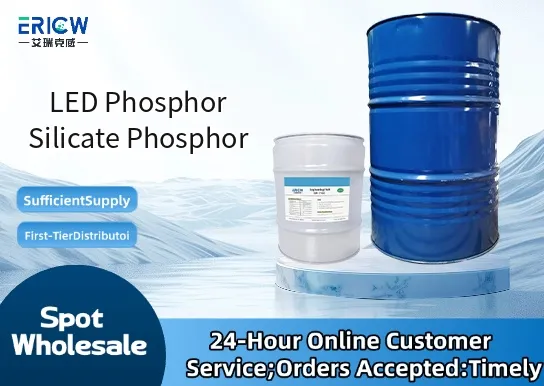
High quantum efficiency under blue LED excitation (450–470 nm), enabling superior luminous efficacy in white LED packages.
Excellent thermal and chemical stability, maintaining consistent photometric performance up to 150 °C in encapsulated LED modules.
Controlled particle size distribution (D50: 8–12 µm) for uniform dispersion in silicone and epoxy resins without sedimentation or agglomeration.
Low moisture absorption (<0.3 wt% at 60% RH), minimizing hydrolytic degradation during long-term operation and storage.
RoHS-compliant formulation with no intentional addition of lead, cadmium, mercury, or regulated heavy metals.
High-CRI general lighting LEDs (e.g., downlights, panel lights, and streetlights requiring Ra > 90).
Backlight units (BLUs) for premium LCD displays, including monitors and professional-grade TVs.
Automotive interior and exterior lighting, including instrument clusters and adaptive headlamps.
Horticultural lighting systems where broad-spectrum emission supports photosynthetic efficiency.
UV-pumped visible-light converters in specialty medical and sensing applications.
| Chemical Type | Silicate-based rare-earth doped phosphor (e.g., (Sr,Ba)₂SiO₄:Eu²⁺) |
| Product Form | Free-flowing fine powder |
| Appearance | Off-white to pale yellow crystalline powder |
| Primary Applications | Blue-pumped white LED conversion layer |
| Key Features | Broad yellow-green emission (peak ~540–560 nm), high color rendering index support |
| Benefits | Improved lumen maintenance (>95% after 6,000 hrs at 85 °C/85% RH in qualified packages) |
| Regulatory Compliance | RoHS 2015/863/EU, REACH SVHC-free (as declared), non-REACH Annex XIV listed |
| Storage Conditions | Sealed container, dry environment (<30% RH), 15–25 °C; use within 12 months of opening |
| Common Compatible Systems | Suitability |
| High-refractive-index phenyl-modified silicone (e.g., Dow SYLGARD™ 184 variants) | Highly Recommended – Excellent dispersion stability and minimal quenching |
| Epoxy resin encapsulants (e.g., Sumitomo EME-6000 series) | Recommended – Requires pre-drying and controlled mixing to prevent bubble formation |
| Acrylic-based LED gels (e.g., Shin-Etsu X-40-9203) | Suitable – Moderate viscosity compatibility; recommended for low-power indicator applications |
| Polymer-dispersed liquid crystal (PDLC) hybrid films | Suitable – Demonstrated compatibility in R&D-grade smart lighting laminates |
Q1: What is the CAS Registry Number for this silicate phosphor?
A: This product is a proprietary multi-component ceramic phosphor; it does not have a single CAS number. Batch-specific composition certificates and IUPAC-annotated material declarations are provided upon request for regulatory submissions.
Q2: What is the typical loading concentration when dispersing in silicone for LED packaging?
A: Standard loading ranges from 8–15 wt% relative to the total encapsulant mass, optimized per target CCT (2700K–6500K) and CRI requirement. Dispersion must be performed under vacuum degassing to avoid voids.
Q3: How does this silicate phosphor compare to YAG:Ce in terms of efficiency and color quality?
A: Compared to standard YAG:Ce, this silicate phosphor offers broader emission bandwidth, enabling higher CRI (Ra > 90) and improved R9 values at equivalent CCT, with slightly lower absolute quantum efficiency (~88–92% vs. YAG’s ~94%) but superior thermal resilience above 120 °C.
Q4: Is migration or leaching of rare-earth ions observed under humid operating conditions?
A: No measurable ion migration occurs under IEC 60068-2-78 humidity testing (85 °C/85% RH, 1,000 hrs) due to the dense, chemically inert silicate lattice structure and proprietary surface passivation.
Q5: Does this material require special handling for occupational safety?
A: It is classified as non-hazardous per GHS. Standard industrial hygiene practices apply: avoid inhalation of dust (use N95 respirator during manual handling), wear nitrile gloves, and ensure local exhaust ventilation during weighing and dispersion.
Contact With Us:
E-mail: wangxingqiang@ericwchem.com
Have a Questions? Call Us:
Add:
Building A1, Jiete Industrial Park, Huangpu District, Guangzhou City, Guangdong Province, China
![4-[(2,3-Dihydrothieno[3,4-b]-1,4-Dioxin-2-yl)Methoxy]-1-Butanesulfonic Acid Sodium Salt](/uploads/image/20260922/4-2-3-dihydrothieno-3-4-b-1-4-dioxin-2-yl-methoxy-1-butanesulfonic-acid-sodium-s_fab320bf.webp "4-[(2,3-Dihydrothieno[3,4-b]-1,4-Dioxin-2-yl)Methoxy]-1-Butanesulfonic Acid Sodium Salt")