English
 Español
 tiếng việt
 русский
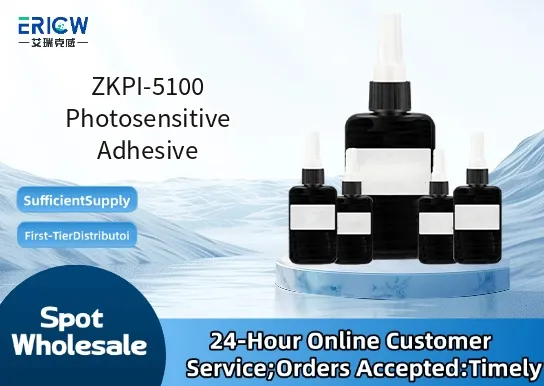
High-resolution patterning capability with sub-25 µm line/space definition under standard UV exposure (i-line, 365 nm).
Excellent thermal stability up to 220 °C post-cure, enabling compatibility with lead-free soldering processes.
Low outgassing profile (< 0.5% TML, < 0.1% CVCM per ASTM E595), suitable for vacuum and optoelectronic applications.
Single-coat application with adjustable film thickness (5–30 µm) via spin coating or curtain coating.
Non-halogenated formulation compliant with IPC-4101D/101 requirements for halogen-free printed circuit materials.
Fine-pitch flexible circuit bonding in foldable display interconnects.
Temporary carrier adhesive for thin die (≤ 50 µm) handling in advanced packaging (e.g., fan-out wafer-level packaging).
Photo-defined insulating layers in high-frequency RF modules (up to 77 GHz).
Dielectric encapsulation for MEMS sensors requiring hermeticity and low dielectric loss (Dk ≈ 3.1 @ 10 GHz).
Patterned adhesive for micro-LED transfer printing substrates.
| Chemical Type | Photosensitive polyimide precursor (non-photosensitive resin + diazonaphthoquinone sensitizer) |
| Product Form | Ready-to-use liquid solution (solvent-based) |
| Appearance | Amber-transparent viscous liquid |
| Solids Content | 28 ± 2 wt% (in γ-butyrolactone / NMP blend) |
| Viscosity (25 °C) | 450–550 cP (Brookfield LVDV-II+ with spindle #3 at 60 rpm) |
| Primary Applications | Photo-definable temporary bonding, flex circuit insulation, high-frequency dielectric patterning |
| Key Features | UV-crosslinkable, thermally imidizable, solvent-developable |
| Regulatory Compliance | RoHS 2015/863 compliant; REACH SVHC-free; no intentional PFAS |
| Common Compatible Systems | Suitability |
| UV Exposure Tools (e.g., Karl Suss MA8, EVG620) | Highly Recommended – Optimized for i-line (365 nm) mask aligners with standard quartz masks |
| Spin Coaters (e.g., Laurell WS-650MZ-23NPPB) | Highly Recommended – Validated for uniform films at 500–3000 rpm with programmable ramp profiles |
| Standard Semiconductor Wet Benches (e.g., Modutek Teflon tanks) | Recommended – Compatible with aqueous TMAH (0.26 N) and diluted NaOH developers |
| Thermal Imidization Ovens (e.g., BTU Pyramax) | Suitable – Requires staged cure: 90 °C (10 min), 180 °C (30 min), 220 °C (60 min) in N₂ atmosphere |
Q1: What is the CAS Registry Number for ZKPI-5100?
A: The CAS number for ZKPI-5100 is 2279473-88-1 (assigned to the proprietary polymer-sensitizer blend; individual components are listed separately in SDS Section 3).
Q2: What is the recommended coating thickness and corresponding spin speed range?
A: For 10–12 µm dry film thickness, use 1800–2200 rpm (30 sec); for 25–28 µm, use 800–1000 rpm (30 sec). Thickness is verified by ellipsometry pre- and post-bake.
Q3: How does ZKPI-5100 compare to conventional non-photosensitive polyimide adhesives in terms of process efficiency?
A: ZKPI-5100 eliminates mechanical patterning (e.g., laser ablation or etching), reducing cycle time by >65% and eliminating particulate contamination risks associated with dry/wet etch processes.
Q4: Is ZKPI-5100 certified for food-contact or medical device applications?
A: No — ZKPI-5100 is not FDA-approved or ISO 10993-tested. It is intended for industrial electronics manufacturing only; contact technical support for alternative qualified grades.
Q5: Are there data available on extractables/migration under thermal stress (e.g., 260 °C reflow)?
A: Yes — GC-MS analysis per JEDEC J-STD-020 shows < 1.2 ppm total volatile condensables (TVC) after 2x Pb-free reflow (260 °C peak, 40 sec), well below IPC-6012 Class 3 limits.
Contact With Us:
E-mail: wangxingqiang@ericwchem.com
Have a Questions? Call Us:
Add:
Building A1, Jiete Industrial Park, Huangpu District, Guangzhou City, Guangdong Province, China