English
 Español
 tiếng việt
 русский
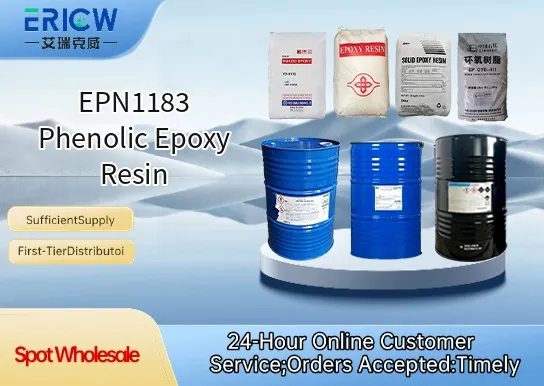
High thermal stability with glass transition temperature (Tg) exceeding 160 °C after full cure.
Exceptional chemical resistance to strong acids, alkalis, and solvents in demanding industrial environments.
Low viscosity in liquid form enables excellent processability for filament winding, impregnation, and casting.
Superior adhesion to metals, carbon fiber, and ceramic substrates without requiring specialized primers.
Halogen-free formulation compliant with RoHS and REACH regulatory requirements.
Aerospace composite tooling and autoclave-molded structural components.
High-voltage electrical insulation systems, including bushings and transformer housings.
Industrial tank linings and corrosion-resistant piping for chemical processing plants.
High-performance printed circuit board (PCB) laminates requiring low CTE and high flame retardancy.
Advanced wind turbine blade root joints and spar cap bonding adhesives.
| Chemical Type | Phenolic epoxy novolac resin |
| Product Form | Light amber viscous liquid |
| Appearance | Clear to slightly hazy, homogeneous liquid |
| Epoxy Equivalent Weight (EEW) | 170–190 g/eq |
| Viscosity at 25 °C | 8,000–12,000 mPa·s |
| Softening Point | 45–55 °C |
| Chlorine Content | < 800 ppm |
| Storage Stability | 12 months at < 25 °C in sealed containers |
Q1: What distinguishes EPN1183 from standard bisphenol-A epoxy resins?
A: EPN1183 is a novolac-type phenolic epoxy resin, offering significantly higher functionality and aromatic density compared to linear bisphenol-A epoxies. This results in enhanced thermal stability, chemical resistance—especially to strong acids and solvents—and superior char formation under elevated temperatures.
Q2: Is EPN1183 suitable for high-temperature curing applications?
A: Yes—EPN1183 is specifically designed for high-temperature thermosetting systems. It exhibits excellent reactivity with conventional amine and anhydride hardeners at elevated cure schedules (typically above 150 °C), delivering robust crosslink density and long-term performance in demanding thermal environments.
Q3: How does EPN1183 perform in flame-retardant composite formulations?
A: Due to its high aromatic content and inherent char-forming tendency, EPN1183 contributes to improved flame retardancy without requiring excessive halogenated additives. It is commonly selected as a matrix resin in aerospace, electrical encapsulation, and fire-rated industrial composites where low smoke and high limiting oxygen index (LOI) are critical.
Q4: Can EPN1183 be blended with other epoxy resins?
A: Yes—EPN1183 is miscible with many liquid and solid epoxy resins, including DGEBA and other novolac epoxies. Blending allows formulators to balance viscosity, reactivity, and final property profiles. Compatibility should be verified experimentally for each specific system, particularly when incorporating reactive diluents or flexibilizers.
Contact With Us:
E-mail: wangxingqiang@ericwchem.com
Have a Questions? Call Us:
Add:
Building A1, Jiete Industrial Park, Huangpu District, Guangzhou City, Guangdong Province, China