English
 Español
 tiếng việt
 русский
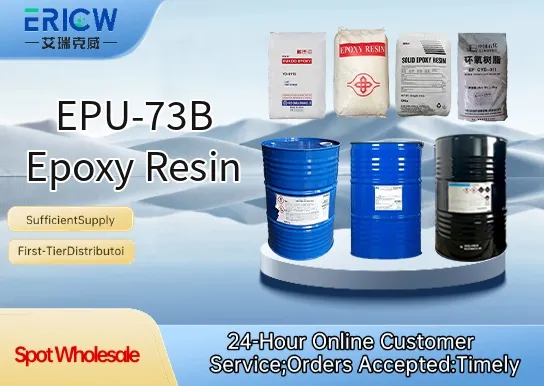
High-performance bisphenol-A based liquid epoxy resin with excellent mechanical strength and chemical resistance.
Low viscosity (12,000–14,000 cP at 25°C) enabling easy handling, mixing, and impregnation of fiber reinforcements.
Superior adhesion to metals, composites, and cured thermosets—ideal for structural bonding and coating applications.
Good thermal stability with glass transition temperature (Tg) up to 130°C after full curing with standard amine hardeners.
Low volatility and low halogen content, supporting compliance with RoHS and REACH regulatory requirements.
Aerospace composite matrix resin for prepregs and filament-wound components.
Electrical insulation systems in high-voltage transformers and bushings.
Structural adhesive formulations for automotive lightweight assemblies.
Protective coatings for offshore and industrial steel infrastructure.
Encapsulants and potting compounds for power electronics and LED modules.
| Chemical Type | Bisphenol-A diglycidyl ether (DGEBA) |
| Product Form | Clear, low-viscosity liquid |
| Appearance | Water-white to pale yellow, transparent |
| Epoxy Equivalent Weight (EEW) | 185–192 g/eq |
| Viscosity (25°C) | 12,000–14,000 cP |
| Chloride Content | ≤ 500 ppm |
| Density (25°C) | 1.16–1.18 g/cm³ |
| Storage Stability | ≥ 12 months at ≤ 25°C in sealed containers |
Q1: What is the primary functional role of EPU-73B in epoxy formulations?
A: EPU-73B functions as a reactive polyurethane-modified epoxy resin, designed to enhance flexibility, impact resistance, and adhesion—particularly on challenging substrates—while maintaining good thermal stability and chemical resistance in cured systems.
Q2: Is EPU-73B compatible with standard amine-based hardeners?
A: Yes, EPU-73B is fully compatible with common aliphatic, cycloaliphatic, and aromatic amine hardeners, as well as anhydride and phenolic curing agents. Reactivity may vary slightly depending on hardener type and formulation pH, so pre-testing is recommended for critical applications.
Q3: How does EPU-73B affect pot life and cure kinetics compared to conventional DGEBA resins?
A: Due to its modified backbone, EPU-73B typically extends pot life modestly at ambient temperature while enabling robust crosslinking under thermal cure conditions. Final cure speed remains largely governed by the selected hardener and thermal profile—not the resin alone.
Q4: Can EPU-73B be used in coatings requiring high gloss and low surface tension?
A: Yes—its low viscosity and balanced surface energy support excellent flow, leveling, and gloss development in high-performance coatings. It is often blended with other epoxy resins to fine-tune film formation without sacrificing mechanical integrity.
Q5: What storage conditions are recommended to maintain EPU-73B stability?
A: Store in tightly sealed containers at temperatures between 10 °C and 30 °C, away from direct sunlight and moisture. Prolonged exposure to freezing conditions or elevated humidity may affect viscosity or clarity; allow to equilibrate to room temperature before use.
Contact With Us:
E-mail: wangxingqiang@ericwchem.com
Have a Questions? Call Us:
Add:
Building A1, Jiete Industrial Park, Huangpu District, Guangzhou City, Guangdong Province, China