English
 Español
 tiếng việt
 русский
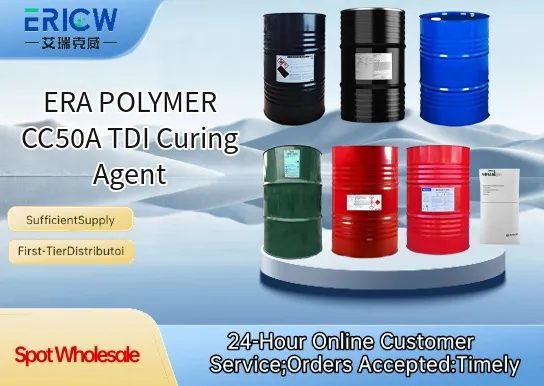
High reactivity with hydroxyl-terminated polyols for rapid gelation and short demold times.
Excellent compatibility with aromatic and aliphatic polyol systems in thermoset polyurethane formulations.
Consistent batch-to-batch performance ensured by strict TDI (toluene diisocyanate) monomer purity control.
Low volatility formulation minimizes handling hazards and supports safer industrial processing.
Enables production of rigid, high-crosslink-density PU foams and elastomers with enhanced thermal stability.
Rigid polyurethane insulation foams for refrigeration and construction panels.
Reaction injection molding (RIM) components for automotive interiors and structural parts.
Cast elastomer systems used in industrial rollers, mining screens, and hydraulic seals.
Adhesives and sealants requiring fast cure kinetics and strong substrate bonding.
Coating resins for protective finishes on metal and concrete substrates.
| Chemical Type | Aromatic polyisocyanate-based curing agent (TDI-derived) |
| Product Form | Liquid |
| Appearance | Clear to pale yellow viscous liquid |
| NCO Content (wt%) | 13.2 – 13.8% |
| Viscosity at 25°C (mPa·s) | 150 – 250 |
| Specific Gravity (25°C) | 1.18 – 1.22 |
| Flash Point (COC) | 175°C minimum |
| Storage Stability | 12 months unopened under dry, cool conditions (≤25°C) |
Q1: What is the primary function of ERA POLYMER CC50A in polyurethane systems?
A: ERA POLYMER CC50A is a TDI-based aromatic curing agent designed to react with polyol prepolymers or resins to form crosslinked polyurethane networks. It contributes to enhanced hardness, chemical resistance, and thermal stability in cured films and elastomers.
Q2: Is CC50A compatible with aliphatic isocyanate systems?
A: CC50A is formulated for use with aromatic isocyanate chemistry and is not recommended for aliphatic systems where UV stability and color retention are critical. Its aromatic structure may lead to yellowing under UV exposure, making it unsuitable for light-stable or outdoor-facing applications requiring non-yellowing performance.
Q3: How should CC50A be stored and handled to maintain reactivity?
A: Store in tightly sealed containers under dry, cool conditions (below 30°C) and protect from moisture, direct sunlight, and ambient humidity. Exposure to moisture will cause premature reaction and gelation due to its high sensitivity to water—always use dry handling equipment and inert gas blanketing when possible.
Q4: What types of coatings or elastomers commonly utilize CC50A as a curing agent?
A: CC50A is widely used in industrial maintenance coatings, heavy-duty floorings, and cast elastomer applications where rapid cure development, high mechanical strength, and solvent resistance are prioritized—especially in controlled indoor environments where UV exposure and color stability are not primary concerns.
Contact With Us:
E-mail: wangxingqiang@ericwchem.com
Have a Questions? Call Us:
Add:
Building A1, Jiete Industrial Park, Huangpu District, Guangzhou City, Guangdong Province, China