English
 Español
 tiếng việt
 русский
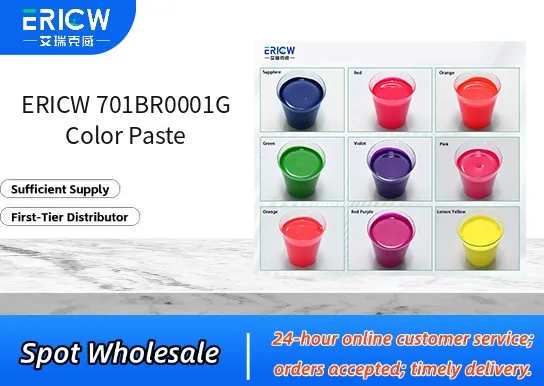
High chroma and excellent color consistency across batch production.
Optimized dispersibility in water-based and solvent-based polymer systems.
Low volatile organic compound (VOC) content, supporting sustainable formulation requirements.
Thermally stable up to 180°C, enabling compatibility with high-temperature processing.
Non-settling rheology profile for extended shelf life and reduced stirring maintenance.
Architectural coatings including interior and exterior wall paints.
Industrial maintenance coatings for metal and concrete substrates.
Plastic coloration for extrusion and injection molding of polyolefins and PVC.
Printing inks for packaging and label applications.
Wood finishes and furniture coatings requiring precise hue reproducibility.
| Chemical Type | Organic pigment dispersion with acrylic stabilizer |
| Product Form | Viscous liquid paste |
| Appearance | Homogeneous brown-red paste, free of visible grit or separation |
| Primary Applications | Water-based and solvent-based coatings, plastics, inks |
| Key Features | High tinctorial strength, low migration, pH-stable (6.5–8.5) |
| Benefits | Reduced dosing requirement, improved gloss retention, minimal filter clogging |
| Storage Conditions | Store at 5–30°C in sealed containers; avoid freezing and direct sunlight |
| Shelf Life | 18 months from date of manufacture under recommended storage |
Q1: What is the primary application field for ERICW 701BR0001G Color Paste?
A: ERICW 701BR0001G is specifically formulated for coloring polyolefin-based compounds, including PP and HDPE, and is widely used in injection molding, blow molding, and extrusion applications for consumer goods, automotive interior components, and industrial packaging.
Q2: Is ERICW 701BR0001G compatible with food-contact-grade polyolefins?
A: Yes — this color paste is designed for use in food-contact applications where regulatory compliance is required. It contains only pigments and carriers suitable for indirect food contact under general global food packaging guidelines; final compliance depends on full formulation assessment and end-use conditions.
Q3: How should ERICW 701BR0001G be incorporated into a polymer matrix?
A: It is typically introduced via masterbatch dilution or direct addition during compounding. For optimal dispersion, pre-mixing with base resin prior to extrusion or injection is recommended, and processing temperatures should remain within standard polyolefin thermal stability ranges.
Q4: What is the typical dosage range for achieving target color intensity?
A: Dosage varies based on desired shade depth and substrate opacity, but it is generally used at low concentrations — typically ranging from 0.1% to 2% by weight relative to the base polymer — with most standard tints achieved between 0.3% and 1.2%.
Contact With Us:
E-mail: wangxingqiang@ericwchem.com
Have a Questions? Call Us:
Add:
Building A1, Jiete Industrial Park, Huangpu District, Guangzhou City, Guangdong Province, China