English
 Español
 tiếng việt
 русский
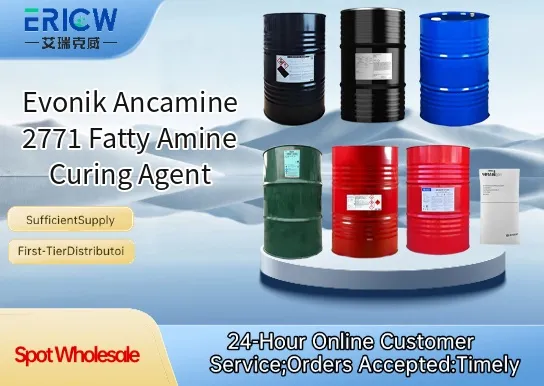
Low-viscosity liquid enabling excellent processability and easy handling in epoxy formulations.
Offers extended pot life at ambient temperatures while delivering rapid cure development upon heating.
Provides superior flexibility and impact resistance in cured epoxy systems without compromising adhesion.
Exhibits low volatility and reduced amine odor compared to conventional aliphatic amines.
Compatible with standard epoxy resins, including DGEBA and novolac types, for broad formulation versatility.
Structural adhesives for aerospace and automotive bonding applications.
High-performance coatings for industrial maintenance and corrosion protection.
Electrical encapsulation and potting compounds requiring thermal stability and dielectric integrity.
Composite matrix resins for filament-wound tanks and wind turbine blade components.
Repair mortars and grouts where controlled reactivity and low exotherm are critical.
| Chemical Type | Fatty amine-based polyfunctional curing agent |
| Product Form | Liquid |
| Appearance | Pale yellow to amber clear liquid |
| Primary Applications | Epoxy resin curing for adhesives, coatings, composites, and electrical encapsulation |
| Key Features | Low viscosity, extended pot life, heat-activated cure, low volatility |
| Benefits | Improved workability, enhanced toughness, reduced VOC potential, good substrate adhesion |
| Storage Stability | Stable under dry, cool conditions (≤25 °C) in sealed containers |
| Reactivity Profile | Latent at room temperature; active cure onset typically above 60 °C |
Q1: What is the primary function of Ancamine 2771 in epoxy systems?
A: Ancamine 2771 is a fatty amine-based curing agent designed to react with epoxy resins, enabling crosslinking at ambient or slightly elevated temperatures. It delivers good flexibility, chemical resistance, and low viscosity for ease of processing in coatings, adhesives, and composite applications.
Q2: Is Ancamine 2771 suitable for high-humidity or underwater cure conditions?
A: Yes — as a hydrophobic fatty amine, Ancamine 2771 exhibits reduced sensitivity to moisture compared to conventional aliphatic amines, making it well-suited for applications where ambient humidity is elevated or where partial cure under damp conditions is required.
Q3: How does Ancamine 2771 compare to standard DETA or DEEDA in terms of handling and safety?
A: Ancamine 2771 offers lower volatility and reduced skin sensitization potential relative to traditional short-chain aliphatic amines. Its higher molecular weight and fatty chain structure contribute to milder odor and improved workplace handling, though standard industrial hygiene practices — including gloves and ventilation — remain essential.
Q4: Can Ancamine 2771 be used in food-contact or potable water applications?
A: Ancamine 2771 is not pre-qualified for direct food-contact or potable water applications. Formulators must conduct full regulatory evaluation — including extraction testing and compliance verification against applicable regional frameworks — before use in such sensitive end uses.
Contact With Us:
E-mail: wangxingqiang@ericwchem.com
Have a Questions? Call Us:
Add:
Building A1, Jiete Industrial Park, Huangpu District, Guangzhou City, Guangdong Province, China