English
 Español
 tiếng việt
 русский
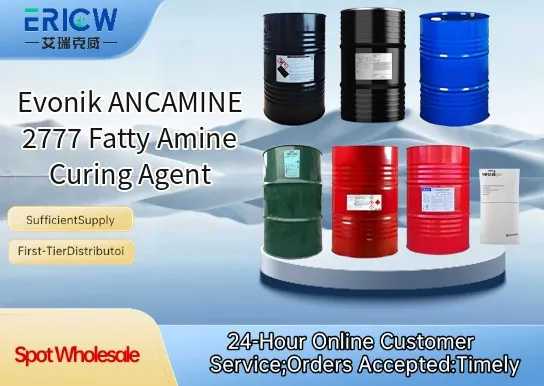
Low-viscosity liquid enabling easy handling and homogeneous mixing with epoxy resins.
Offers extended pot life at ambient temperatures while delivering rapid cure development upon heating.
Provides excellent flexibility and impact resistance in cured epoxy systems.
Delivers good chemical resistance, particularly to alkalis and solvents.
Compatible with a broad range of standard diglycidyl ether of bisphenol-A (DGEBA) and cycloaliphatic epoxy resins.
Structural adhesives for automotive and aerospace assembly.
Electrical encapsulation and potting compounds requiring thermal stability and low stress.
High-performance flooring and protective coatings for industrial environments.
Composite matrix resins for filament-wound and pultruded components.
Tooling and mold-making materials demanding dimensional stability and toughness.
| Chemical Type | Fatty amine-based polyamine curing agent |
| Product Form | Liquid |
| Appearance | Pale yellow to amber clear liquid |
| Primary Applications | Epoxy resin curing for structural adhesives, composites, and coatings |
| Key Features | Low viscosity, balanced reactivity, flexibility enhancement |
| Benefits | Improved processability, reduced internal stress, enhanced toughness |
| Storage Conditions | Store in original sealed container at 10–30 °C; protect from moisture |
| Regulatory Status | REACH registered; compliant with applicable EU and US regulations |
Q1: What is the primary function of ANCAMINE 2777 in epoxy systems?
A: ANCAMINE 2777 functions as a reactive fatty amine curing agent, enabling ambient- or elevated-temperature crosslinking of epoxy resins to deliver flexible, tough, and chemically resistant thermoset networks—particularly valued in protective coatings and adhesives.
Q2: How does ANCAMINE 2777 compare to conventional aliphatic amines in terms of handling and pot life?
A: Due to its modified fatty amine structure, ANCAMINE 2777 offers reduced volatility and lower skin sensitization potential compared to many unmodified aliphatic amines, while providing extended working time (pot life) at ambient temperatures—especially when blended with slower-reacting co-curing agents.
Q3: Is ANCAMINE 2777 suitable for high-solids or solvent-free epoxy formulations?
A: Yes—its low viscosity and good compatibility with common epoxy resins make it well-suited for high-solids, low-VOC, and 100% solids epoxy systems, supporting formulation flexibility without compromising film formation or cure performance.
Q4: Can ANCAMINE 2777 be used in food-contact or potable water applications?
A: While ANCAMINE 2777 is not pre-approved for direct food contact, it may be incorporated into finished epoxy systems that undergo full post-cure and compliance testing per applicable regulatory frameworks—formulators must validate final system suitability through third-party assessment and migration testing.
Contact With Us:
E-mail: wangxingqiang@ericwchem.com
Have a Questions? Call Us:
Add:
Building A1, Jiete Industrial Park, Huangpu District, Guangzhou City, Guangdong Province, China